Free Translation Apps Fail During Emotional Family Calls

When my parents called from their anniversary dinner in Portugal, I expected a heartwarming conversation.
A family gathered in Lisbon to celebrate their parents' 40th wedding anniversary. Cousins dialed in from three different countries, grandchildren practiced their speeches, and someone downloaded a free translation app to help the Portuguese and English speakers connect. Then the toasts began, and everything fell apart. The app misheard "saudade," defaulted to Brazilian Portuguese instead of European, and froze entirely when everyone started crying happy tears. What happened next reveals why free translation tools and emotional family moments rarely mix well.
If you want the practical product flow, Bridgecall's video call translation page explains translated voice, subtitles, and browser-based joining in one place.
The anniversary call that started with the wrong Portuguese
My parents called from a small restaurant in Lisbon. It was their 35th anniversary, and they wanted to share the moment with my daughter, who doesn't speak Portuguese. The plan was simple: use a translation app so everyone could finally talk in real time. Excitement filled both ends of the call.
Then my mother started speaking, and a stranger's voice came out.
The app had defaulted to Brazilian Portuguese. My mother's warm European Portuguese, the accent I grew up hearing over dinner and during bedtime stories, was replaced by something flat and robotic. The intonation was wrong. The cadence felt off. My father's dry humor landed as monotone statements.
Most free translation tools treat all Portuguese as Brazilian Portuguese. Microsoft Translator does offer a specific European Portuguese voice function that works with "good success" according to Portugal learners and expats who have shared tips for making the most of translator apps. But we weren't using Microsoft that day. We grabbed whatever free app came up first.
The emotional cost hit harder than expected. Hearing your mother's storytelling voice, the one that shaped your childhood, flattened into an algorithmic approximation creates a specific kind of dissonance. It feels like talking to a stranger wearing her face. The words are technically correct. The person behind them has disappeared.
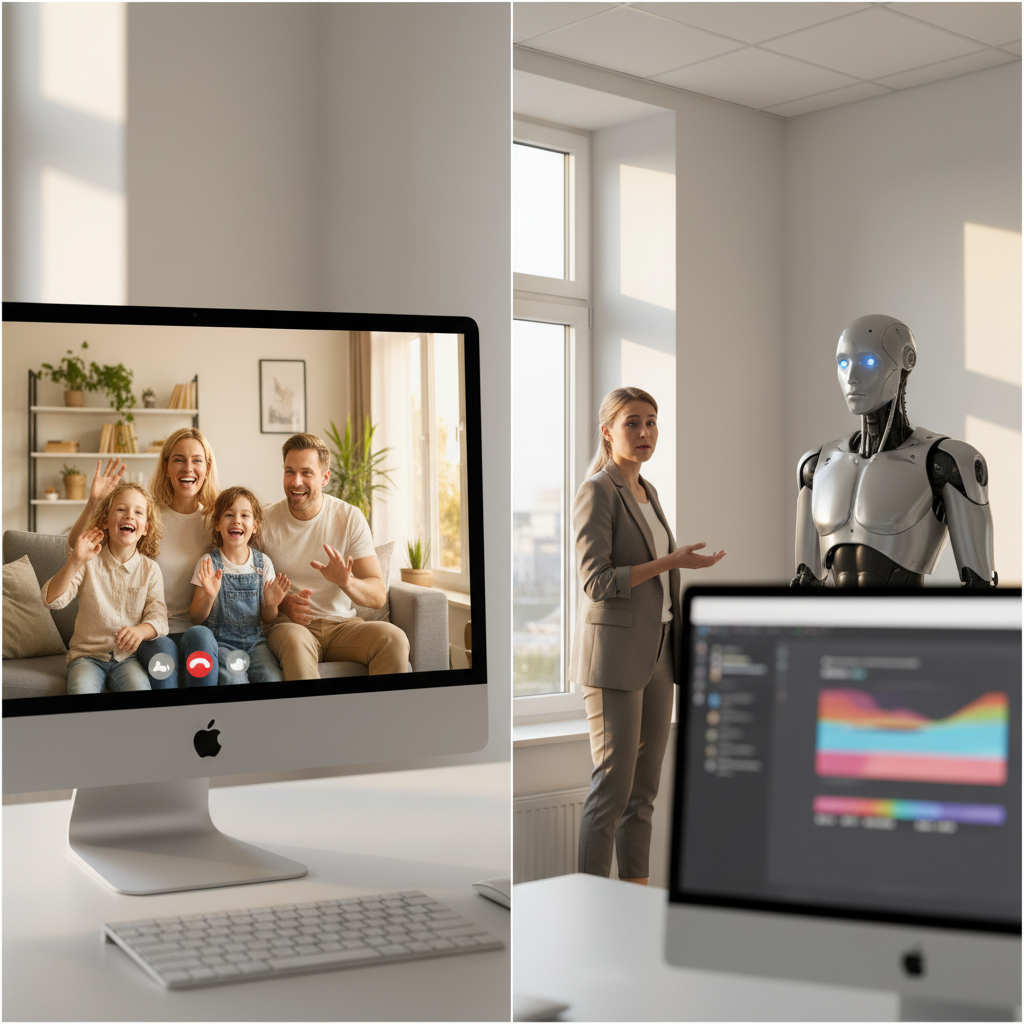
When the restaurant celebration drowned out grandma's childhood story
Then my grandmother took the phone. She wanted to share something about her own parents' wedding, a story she almost never tells. The restaurant noise had other plans.
Step 1: Grandma started speaking. The app picked up clinking glasses, laughter from the next table, and a waiter calling out orders.
Step 2: The translation output became word salad. "Wedding" became "weather." Her father's name disappeared entirely. Fragments of a story my daughter had never heard turned into algorithmic nonsense.
Step 3: Someone suggested the fix. Hold the phone 2-3 inches from your mouth. That's what the experts recommend for noisy environments like markets, busy restaurants, and tourist sites.
Step 4: Picture an 82-year-old woman at her son's anniversary dinner, surrounded by family, asked to press a phone against her face like she's recording a voice memo. The alternative was worse: switch to typing. Kill the spontaneity entirely.
She put the phone down. The story stopped.
Some moments don't come back. My grandmother doesn't tell that particular story often. The conditions for hearing it, her feeling nostalgic, the right family members present, her willingness to share, those aligned once. The technology failed to meet them.
My daughter got fragments. A few words about a dress. Something about rain. The rest lives only in my grandmother's memory.

"The app heard everything except the story that mattered."
The $7.99 paywall that appeared mid-sentence
Twenty minutes into the call, the screen changed. My daughter was mid-sentence, trying to tell her great-grandmother about school. A paywall appeared demanding $7.99 per month to continue.
That mid-call paywall is part of the larger problem with free translation promises. We unpack the true cost of Google Translate live calls.
The timing felt almost cruel. Not during small talk. Not during a pause. Right when the conversation had finally found its rhythm.
The app in question, iTranslate, charges $7.99 monthly while scoring only 4 out of 10 in WIRED's comprehensive testing. Reviewers recommended NOT using it at all, citing mistakes "across the board." We paid for an app that experts say performs worse than free alternatives like Google Translate.
The subscription trap runs deeper than one bad app. Users across app stores report billing scams where free trials auto-convert to paid subscriptions exceeding $20 per month. One reviewer noted the charges appeared only as "iTunes" on bank statements. Good luck disputing something that generic.
The real cost calculation works like this: "free" apps charge you first in ruined moments. The freezing during your grandmother's story. The wrong dialect flattening your mother's voice. The noise that drowns out irreplaceable memories. Then, once the emotional stakes are highest, they demand money to stop ruining future moments.
We paid the $7.99. The call resumed. My daughter finished her sentence to a woman who had already lost the thread.
The gap between ordering coffee and hearing family stories
Most translation app reviews test the easy stuff. Ordering coffee. Asking for directions. Buying train tickets. Clean audio, simple vocabulary, zero emotional stakes.
Tourist translation and family translation are different jobs, even when the vocabulary overlaps. The distinction is clearer in travel translation apps vs. family calls.
Premium subscriptions range from $4.99 to $9.99 monthly, or $39.99 to $99.99 yearly. Even at those prices, the apps fail at what actually matters: sustained emotional conversation.
Family calls demand something entirely different from tourist transactions. Overlapping speech when three cousins talk at once. Dialect expressions that don't appear in any dictionary. The way your uncle's voice changes when he mentions your late grandfather. Background context stretching back decades. A pause that means "I'm choosing my words carefully" versus one that means "I forgot what I was saying."
Translation apps weren't built for any of this. They were built for "Two coffees, please" and "Where is the nearest metro station?"
The privacy dimension adds another layer. Apple's Translate processes most translations on-device rather than sending data to external servers. That matters when the conversation includes health problems, family disputes, financial struggles, or the thousand intimate details that emerge during real family calls. Competitors route everything through their servers. Your grandmother's medical concerns become training data.
The pricing disconnect is striking. Families pay premium subscription fees for technology designed around transactional encounters. The app performs adequately when buying pastéis de nata. It collapses when your mother starts crying.
What real-time family translation actually requires
The anniversary call failure wasn't about bad luck. It exposed exactly what family translation demands versus what most apps deliver.
-
Dialect accuracy over vocabulary size. Your mother's European Portuguese carries decades of identity in its cadence. Brazilian Portuguese might be "technically correct," but it erases the person speaking. Voice represents identity. Apps that treat all dialects as interchangeable miss the point entirely.
-
Background noise handling for real life. Families gather in restaurants, at parties, during holidays. Testing translation in quiet rooms produces meaningless results. The technology either works when your uncle's dog barks and three people talk at once, or it doesn't work when it matters.
-
Transparent pricing from the start. The $7.99 paywall appeared mid-sentence during an irreplaceable moment. Honest pricing upfront costs less than emotional hostage situations. Families deserve to know what they're paying before the call begins.
-
Built for voices, not text. Typing kills spontaneity. The technology needs to handle spoken conversation with all its messiness, not retreat to keyboards when audio gets complicated.
-
Designed for connection, not transactions. Ordering coffee requires different technology than hearing your grandmother's wedding story. A phone call translator built specifically for real conversations handles the dialect matching and audio challenges that tourist apps simply weren't designed for.
Bridgecall approaches this differently. Real conversations with real people, where the voice on the other end sounds like the person you love.
Don't let your next family call become another story about what went wrong. Try Bridgecall for your personal calls and hear your loved ones as themselves, not as robots.
Related Bridgecall Guides
How to Translate a Phone Call Without an App
Use one browser link for a voice-only translated call with no guest installation.
Video Call Translation
Start browser-based translated video calls with voice and subtitles.
Phone Call Translator
Start voice-first multilingual conversations without app installation.
Translation Earbuds vs Phone Apps: The Dependency Issue
Translation earbuds promise seamless communication, but most require a connected phone to function.
Real-Time Call Translation for Families: Europe 2026
Every missed conversation between grandparents and grandchildren is gone forever.
Cross-Border Remote Work: Translation Tools for Families
When parents work for companies in different language zones, family logistics quietly fall apart.
Ready to start multilingual calls?
Create a Bridgecall room in minutes and let everyone speak in their own language.
Start your 7-day trial