Real-Time Call Translation for Families: Europe 2026
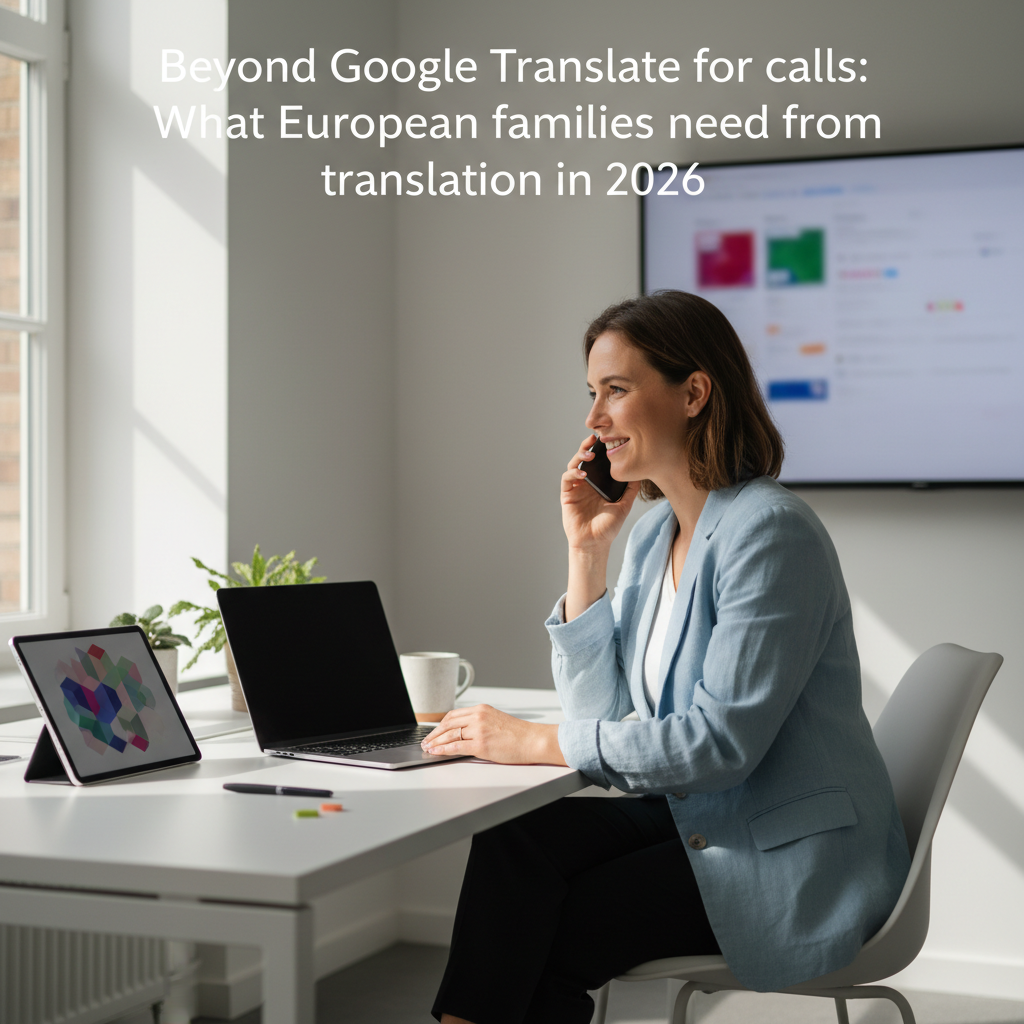
Every missed conversation between grandparents and grandchildren is gone forever.
A grandmother in Sofia and her granddaughter in Amsterdam share a 6-7 year gap in life expectancy. They also share something else: a language barrier that turns every phone call into a frustrating exercise in repetition and misunderstanding. Across Europe, millions of families face this reality. Translation technology exists, but the awkward pauses, the waiting for processing, the loss of natural conversation flow. These problems hit hardest where they matter most, in the moments between elderly parents and the children who moved abroad for work.
For the live calling experience itself, Bridgecall helps people start translated video calls with one link and no guest installation.
The conversations you can never get back
When a grandmother in Lisbon can't share bedtime stories with her grandchildren in Stockholm, those moments don't wait. They vanish. The story she wanted to tell last Tuesday is gone. The lullaby that would have connected three generations, lost to a language barrier and clunky technology.
-
The European gap is real. Countries with high multilingualism like Luxembourg and the Netherlands report life expectancies of 82.5 years. Bulgaria sits at 75.8 years, Romania at 76.3. That 6 to 7 year difference correlates with something often overlooked: language isolation and its impact on elderly wellbeing.
-
The true cost is cumulative. We call it the 'Missed Conversations' problem. One awkward phone call isn't the issue. It's the hundreds of natural exchanges that never happen because the technology makes talking feel like work.
-
Dignity matters more than accuracy. For elderly family members, speaking in their native language provides comfort that perfect translation scores can't measure. A 98% accurate translation still feels cold when natural rhythm disappears.
-
Families need connection, not perfection. What European families are looking for isn't flawless word-for-word conversion. They want tools that preserve the warmth of conversation, the natural back-and-forth that makes a phone call feel like sitting in the same room.
The question for millions of European families: how do we stop losing these moments?

Why Google Translate fails the dinner table test
Google Translate works fine for reading a menu in Barcelona. It falls apart at Sunday dinner with your grandmother in Bucharest.
The fundamental problem is latency. Translation devices require users to pause between sentences for processing. That pause, sometimes two or three seconds, breaks something essential. Storytelling requires flow. Jokes need timing. The comfort of family conversation comes from uninterrupted exchanges, the overlapping voices, the natural interruptions, the laughter that builds on laughter.
A 98% accurate translation means nothing when the warmth disappears in the waiting.
Picture a family meal. Three conversations happening at once. Someone finishes a story while another person already starts their response. A child interrupts with a question. Grandmother adds a comment from across the table. Now add a translation device that needs silence and turn-taking to function. The meal becomes clinical. The technology that's supposed to connect people actually creates distance.
There's also a distinction between professional and personal needs. Immigration authorities require independent translators for formal documents, a requirement outlined in the EU language translation framework, and that makes sense for legal accuracy. But families need something entirely different. They need emotional fluency. The ability to hear affection in a voice, to catch the subtle humor in a grandmother's teasing, to feel present across thousands of kilometers.
Professional translation serves paperwork. Family connection serves the heart.
The hidden limits of translation earbuds and apps
The marketing materials show sleek devices promising "8 hours of playback time." The reality is more complicated.
Translation earbuds drain battery differently than music playback. The constant processing, the app running on your phone, the Bluetooth connection working overtime. Sessions often end not because the earbuds die, but because the phone app has consumed 40% battery in under an hour. That Sunday lunch call with grandmother in Warsaw? It ends when the smartphone gives up, even with fully charged earbuds sitting in your ears.
Then there's the physical reality. Asking a 78-year-old to wear earbuds during family dinner feels clinical. It looks like a hearing aid arrangement, not a natural conversation. Many elderly relatives resist the setup entirely. The technology that's supposed to bring families together creates an immediate visual barrier.
The learning curve compounds everything. Pairing devices, downloading apps, adjusting settings, troubleshooting connection issues. By the time some grandparents master the process, months of potential conversations have already passed. We've seen families give up entirely after three failed attempts to get the technology working.
A phone call translator often works better for natural family settings. The phone is already familiar. There's no additional hardware to charge, pair, or explain. Grandmother holds the device she already uses every day. The conversation flows through something that feels normal, not medical.
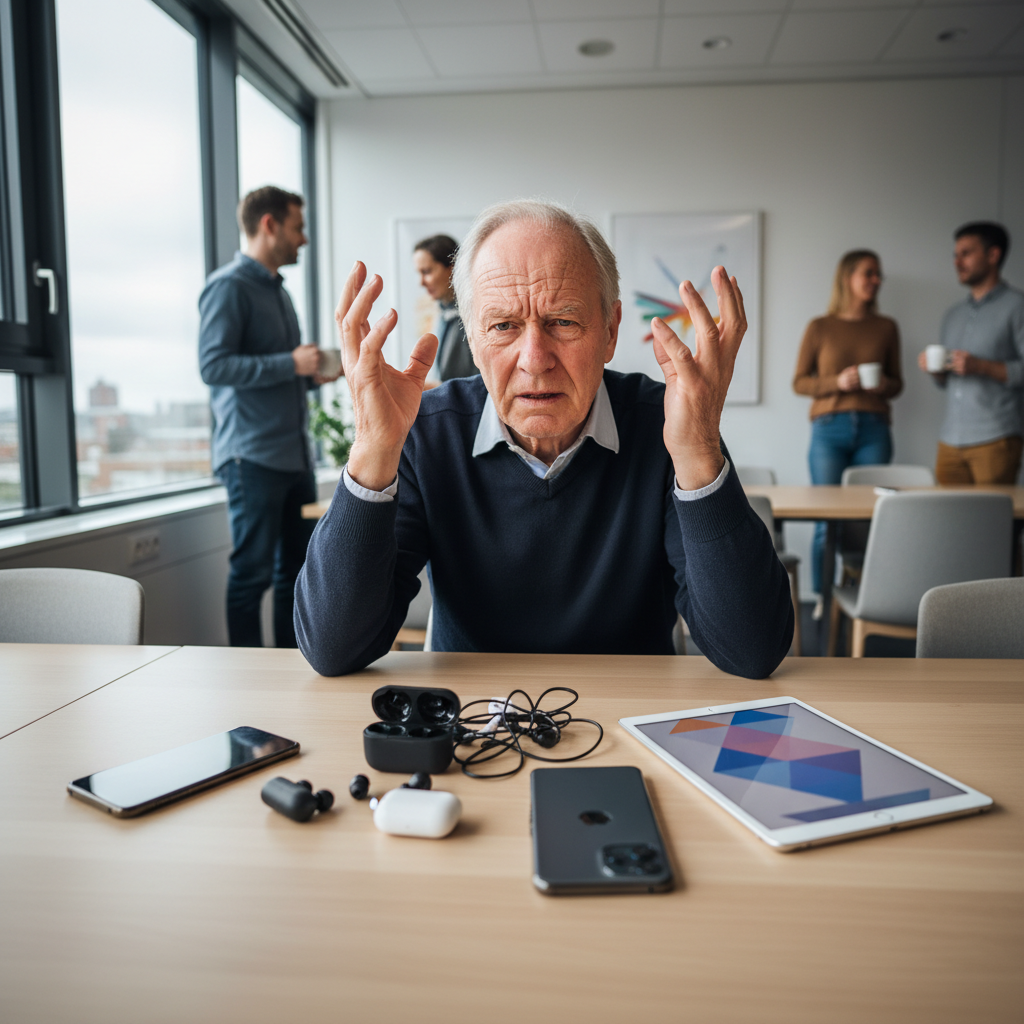
What aging parents actually need: dignity over accuracy
Healthcare professionals have known this for years. For elderly individuals in care settings, communicating in their native language provides comfort and dignity beyond what translation accuracy alone can measure. A safe alternative to standard translation tools matters more in these moments than perfect word matching.
Dignity starts with removing the small frictions that make people feel dependent. The seven most common ones are listed in real-time translation for older parents.
The same principle applies to family calls. An aging father in Zagreb discussing his tomato plants doesn't need clinical precision. He needs to feel heard. The way he describes the morning sun on his balcony, the pride in his voice when he mentions the first red fruit. These details matter more than dictionary-perfect translations.
Then there's reminiscing. Elderly parents often circle back to the same stories. They pause mid-sentence, searching for a name. They repeat themselves. They wander from one memory to another without clear transitions. Rigid translation tools treat these natural patterns as errors. The pause gets flagged. The repetition creates confusion. The meandering story gets chopped into disconnected fragments.
We're seeing families choose technology that adapts to slower speech rhythms. Tools that recognize when an emotional pause is just that, a pause, not a signal to interrupt or prompt. Translation that handles repeated phrases without breaking flow.
The difference is subtle but essential. Processing speech versus preserving presence. One treats conversation as data. The other treats it as connection.
Video calls with grandparents: the 2026 reality check
Video calling has become the default for distributed European families. A grandmother in Athens expects to see her grandchildren in Munich every Sunday. The technology works beautifully, until you add translation.
Grandparent calls are also where families see whether translation reduces the burden on the middle generation. That shift is the focus of multilingual grandparents.
Text-based tools had decades to mature. Real-time speech translation on video still struggles with the basics. The processing delay creates an uncanny valley effect. Lips move, but words arrive a beat later. Facial expressions disconnect from the translated audio. The brain notices something is wrong, even when it can't articulate what.
There's a reason schools still provide professional interpretation for consequential conversations like discipline discussions and parent meetings. Translation devices aren't enough when the stakes matter. Families deserve that same quality for their own consequential moments. A grandparent meeting a new grandchild for the first time. A father explaining his health diagnosis to children abroad.
Effective video call translation requires three things working together: integration that doesn't require technical setup, delay measured in milliseconds rather than seconds, and the ability to watch grandmother's face while hearing her words in your language. Most tools manage one of these at best.
A Google Meet translation alternative built specifically for family patterns performs differently than business-focused solutions. Family calls have overlapping speakers, emotional tangents, inside jokes that need cultural context. The technology that handles corporate meetings often fails at birthday dinners.
Purpose matters. Tools designed for families understand what families actually need.
Building a family translation toolkit that actually works
The core requirements are clear by now. Low latency that preserves conversational rhythm. Session capability that outlasts a Sunday lunch. Interfaces simple enough for a 78-year-old who didn't grow up with smartphones. And above all, technology that treats family conversation as connection, not data processing.
Families evaluating translation tools often make the same mistake. They test with a quick phrase exchange, maybe a minute of back-and-forth. That reveals almost nothing. A 30-minute family conversation exposes everything: battery drain, processing delays during emotional moments, how the tool handles interruptions and overlapping voices. The dinner table test matters more than any spec sheet.
The conversations you can have with aging parents today won't wait for technology to improve tomorrow.
Regular scheduling helps more than most families expect. Weekly "translation calls" at the same time build comfort and routine. Grandmother learns the technology through repetition, not instruction manuals. The awkwardness of the first few calls fades. What remains is connection.
Waiting for perfect technology is a losing strategy. A grandmother in Sofia turning 78 this year has perhaps 2,000 more Sunday dinners ahead of her. Each one spent waiting for better tools is a conversation that never happens. The technology available now, while imperfect, already enables meaningful family connection across language barriers.
The moments are finite. The opportunity is now.
Related Bridgecall Guides
How to Translate a Phone Call Without an App
Use one browser link for a voice-only translated call with no guest installation.
Video Call Translation
Start browser-based translated video calls with voice and subtitles.
Phone Call Translator
Start voice-first multilingual conversations without app installation.
Free Translation Apps Fail During Emotional Family Calls
When my parents called from their anniversary dinner in Portugal, I expected a heartwarming conversation.
Translation App Fails: Real Stories from European Travelers
From ordering avocados instead of hiring lawyers to medical emergencies lost in translation, European travelers share their most memorable app failures.
Translation Earbuds vs Phone Apps: The Dependency Issue
Translation earbuds promise seamless communication, but most require a connected phone to function.
Ready to start multilingual calls?
Create a Bridgecall room in minutes and let everyone speak in their own language.
Start your 7-day trial