Translation App Fails: Real Stories from European Travelers

From ordering avocados instead of hiring lawyers to medical emergencies lost in translation, European travelers share their most memorable app failures.
You asked for directions to the lawyer's office. Google Translate turned you into someone looking for an avocado. It sounds absurd, but it happens more often than you'd think. We've collected real stories from European travelers whose translation apps failed them at the worst possible moments, and the results range from mildly awkward to genuinely chaotic.
For a simpler setup, Bridgecall offers browser-based video call translation with translated voice and live subtitles.
The avocado lawyer and other harmless comedy
The classic example keeps making the rounds for good reason. Google Translate turns "I am a lawyer" into "Je suis un avocat" in French, which actually means "I am an avocado." Microsoft Translator gets it right with "Je suis avocat," dropping the "un" that changes everything. One small article, one very different profession.
Travel forums are full of similar stories. The pattern is surprisingly consistent:
- Homophones and false friends cause the most chaos. Words that sound alike or look similar across languages trip up apps constantly. Ordering "preservativos" thinking you're asking for jam in Spanish? That's condoms. Asking for "gift" in German? That's poison.
- Context-dependent vocabulary breaks the algorithm. Apps can't read the room. They don't know if you're at a law firm or a farmer's market, so they guess. Often wrong.
- The emotional arc is always the same. Confidence in the app, confusion at the local's reaction, eventual laughter when someone explains what you actually said.
- British English travels better in Europe. Rick Steves points out that Europeans learn from British textbooks, so "toilet" works better than "restroom" and "holiday" beats "vacation" every time.
The good news? These mistakes usually end in shared laughter, not disaster.
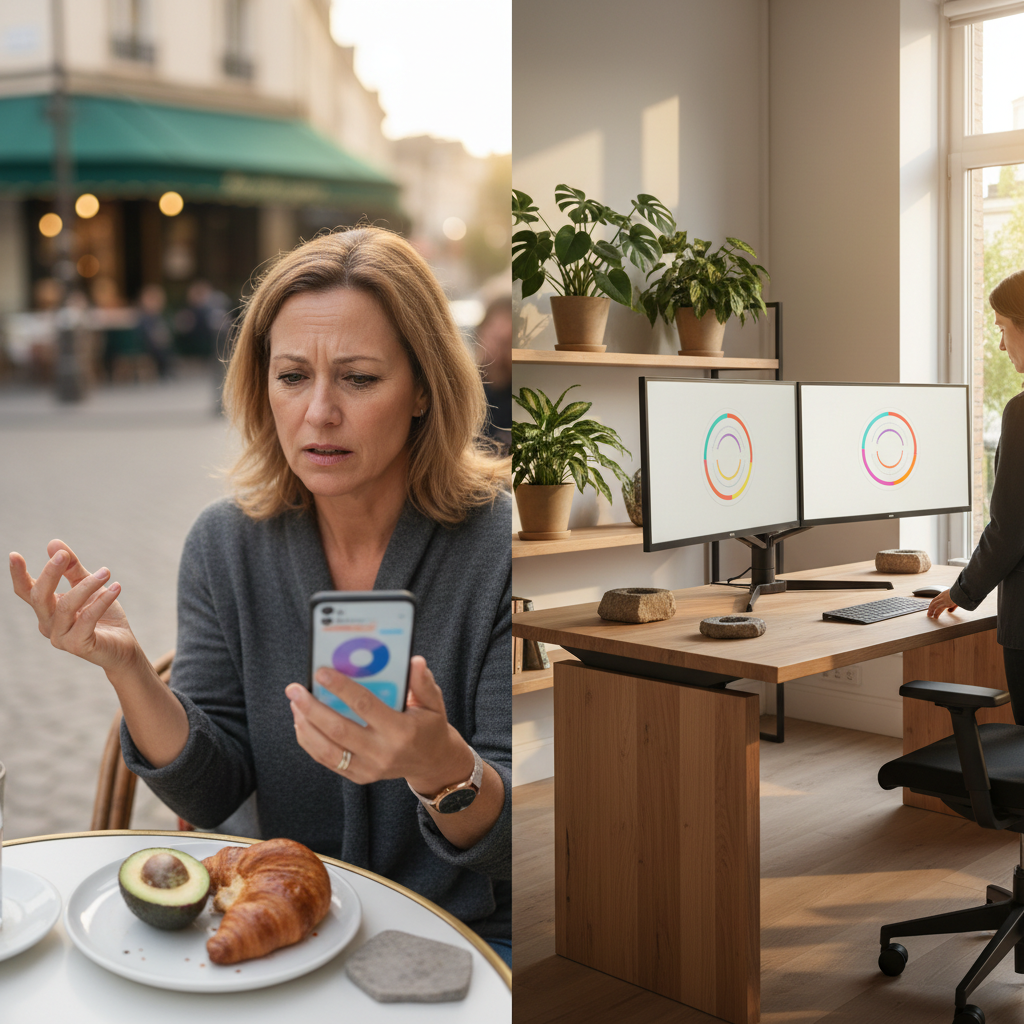
"The app was confident. The waiter was confused. The avocado was delicious."
Awkward social moments: When apps embarrass the whole family
Not everyone whips out their phone with confidence. According to a Saga Holidays survey, 16% of Britons feel genuinely embarrassed using translation apps in public, and 37% worry about pronunciation. The social anxiety is real.
Picture the scene playing out at restaurants across Europe: a teenager hunched over a phone, helping grandparents decode a menu while the waiter waits. These moments create a strange mix of family comedy and tension. The kids are fluent in apps but clueless about etiquette. The grandparents remember a time when phrasebooks did the job. Everyone's a little frustrated.
The apps struggle most with informal speech. In one documented case, "mi jefe," a colloquial Spanish term for "father," was translated as "my boss." That mistranslation contributed to an asylum application being denied because it made a domestic abuse claim incomprehensible. Most tourist situations are far lower stakes, but the principle holds. Apps don't understand how real people actually talk.
Here's what's interesting about the social dynamics: locals genuinely appreciate effort over perfection. App-generated speech often sounds stilted or inappropriately formal, creating distance rather than connection. Britons who learned even basic phrases, on the other hand, found that vendors opened up. They got offered daily specials instead of tourist menus. Better prices at markets. The difference between being treated as a visitor versus a customer.
Saga Holidays' Alison Porter suggests 15 minutes learning five key phrases. Small investment, significant returns.
Near misses: Medical and safety translation failures
The stakes change completely when health is involved. Avocado lawyers make for good stories. Mistranslated allergies can send someone to the hospital.
- Food allergies become a guessing game. Parents traveling with allergic children report apps translating "peanut allergy" into vague warnings that sound more like preferences than medical emergencies. One family in Italy watched a waiter shrug at their phone screen, clearly not understanding the severity. The app had translated their daughter's tree nut allergy into something closer to "doesn't like nuts."
- Medical terminology trips up every major translation app. Words like "anaphylaxis," "epinephrine," and "contraindicated" either get mangled or skipped entirely. Pharmacy visits become charades. Minor emergencies turn into frustrating loops of showing symptoms while the app suggests increasingly irrelevant phrases.
- Official contexts show the real danger. Translation errors have contributed to asylum applications being denied. The CBP One app's Haitian Creole FAQ section displays strings of letters with no spaces or accent marks, making critical information completely unusable for the people who need it most.
- What actually works looks decidedly low-tech. Travelers who avoided problems carried pre-written allergy cards in local languages, verified by native speakers before the trip. Original medication packaging with visible labels helped pharmacists identify equivalents. For ongoing communication needs, real-time phone call translation with human oversight catches errors that apps miss entirely.
The pattern is clear: apps fail hardest where precision matters most.
Where translation apps break down: The pattern behind failures
Three failure zones show up again and again. Cultural context. Colloquialisms and slang. Specialized terminology. Apps struggle with all three, and the results range from awkward to dangerous.
The same failure pattern explains why a holiday app can feel helpful abroad but clumsy at home. We compare those contexts in travel translation apps vs. family calls.
The technical failures are sometimes shocking. The CBP One app, designed by the US government for asylum seekers, renders its Haitian Creole FAQ section as a string of letters with no spaces or accent marks. Completely unusable for the people who need it most. If a well-funded government app can't handle basic text formatting, consumer translation apps face similar limitations with less common languages and dialects.
Tone and politeness levels create another blind spot. European languages often have formal and informal registers, and getting it wrong matters. Using "tu" instead of "vous" with a French hotel concierge signals disrespect. Apps default to one or the other with no understanding of social context. Regional variations compound the problem. Spanish in Barcelona sounds different from Spanish in Madrid, and the app doesn't know which one you need.
People who use Google Translate when traveling have documented consistent problem areas across Reddit threads: menu items that don't exist in the target culture, idioms that translate literally into nonsense, and medical terms that come out garbled.
The cruel irony? Apps fail hardest during high-pressure moments. When a child is sick, when a train is leaving, when customs officials are asking questions. Exactly when families need reliable communication, the technology tends to buckle.
What actually works: Building your translation safety net
The travelers who get this right follow a layered approach. Basic phrases for human connection. Apps for simple queries. Human-verified solutions for anything that matters.
A useful safety net combines simple fallback habits with tools built for real conversations. The family-focused version is outlined in real-time call translation for families.
Saga Holidays' Alison Porter puts it simply: 15 minutes learning five key phrases makes a measurable difference. Greetings, please, thank you, the basics. That small investment changes how locals respond to you. Britons who speak even minimal local language phrases report better deals from market vendors and restaurant owners who share daily specials rather than tourist menus.
"The app got me to the train station. The two phrases I learned got me invited to dinner."
Language learning tools have made pre-trip preparation surprisingly accessible. Families who spend a few weeks building basic vocabulary arrive with confidence that apps alone can't provide. The technology supports the effort rather than replacing it.
Travelers discussing reactions to translation app use in Rick Steves' community consistently report the same finding: locals warm up when they see genuine effort. Even terrible pronunciation gets a smile. Perfect app translations delivered without any personal attempt get polite tolerance at best.
The winning combination looks like this: enough phrases to show respect, apps for menu translations and quick lookups, and professional interpretation for medical situations or important bookings. Technology works best as a supplement to human effort, not a replacement for basic cultural preparation.
Planning a European holiday with family? Discover how Bridgecall's real-time translation keeps conversations flowing naturally, whether you're booking hotels, handling emergencies, or simply connecting with locals. Try it before your next trip.
Related Bridgecall Guides
How to Translate a Phone Call Without an App
Use one browser link for a voice-only translated call with no guest installation.
Video Call Translation
Start browser-based translated video calls with voice and subtitles.
Phone Call Translator
Start voice-first multilingual conversations without app installation.
Real-Time Call Translation for Families: Europe 2026
Every missed conversation between grandparents and grandchildren is gone forever.
AI Translation: Why Slow Communication Builds Bonds
The friction of translation-mediated relationships is creating surprising intimacy benefits.
Free Translation Apps Fail During Emotional Family Calls
When my parents called from their anniversary dinner in Portugal, I expected a heartwarming conversation.
Ready to start multilingual calls?
Create a Bridgecall room in minutes and let everyone speak in their own language.
Start your 7-day trial