Translation Latency in Family Calls: The 3 Second Problem

When your toddler says their first full sentence to grandma, a 3-second translation delay turns magic into awkwardness.
Three seconds doesn't sound like much. But in a family video call, three seconds of translation delay is enough to kill a joke, miss a toddler's fleeting smile, or turn emotional support into awkward silence. Google Meet's live translation demos still show visible lag even under controlled conditions, and that friction compounds fast when you're trying to have a real conversation with your grandmother in Madrid or your partner in Tokyo.
If you want the practical product flow, Bridgecall's video call translation page explains translated voice, subtitles, and browser-based joining in one place.
The moment that made me realize latency matters more than accuracy
My niece told her first real joke last Christmas. She's four, and she'd been practicing all week. Her grandmother in Valencia leaned in close to the screen, ready to laugh. But the translation arrived three seconds after the punchline, and by then my niece had already moved on, confused by the silence where laughter should have been.
That moment stuck with me. Here's why latency matters so much for families:
-
Even Google Meet's live translation feature shows a visible "split-second delay" before translations kick in during real conversations between English and Spanish speakers. In controlled demos, that friction is already noticeable. In a living room with a toddler, it's enough to break the connection.
-
Business meetings can absorb a few seconds of delay. Someone takes notes, another person checks their email. Family conversations don't work that way. A grandmother's reaction needs to land in the same breath as the child's joke.
-
Google clearly recognizes this gap. Their 2025 I/O demo specifically highlighted "English-speaking grandchildren chatting effortlessly with Spanish-speaking grandparents" as a key use case. The market is real. The solution isn't quite there yet.
-
Translation tools built for boardrooms prioritize accuracy over timing. Family dinner tables need both, but timing comes first.
The tech companies see families as a market. They just haven't built for our rhythm yet.
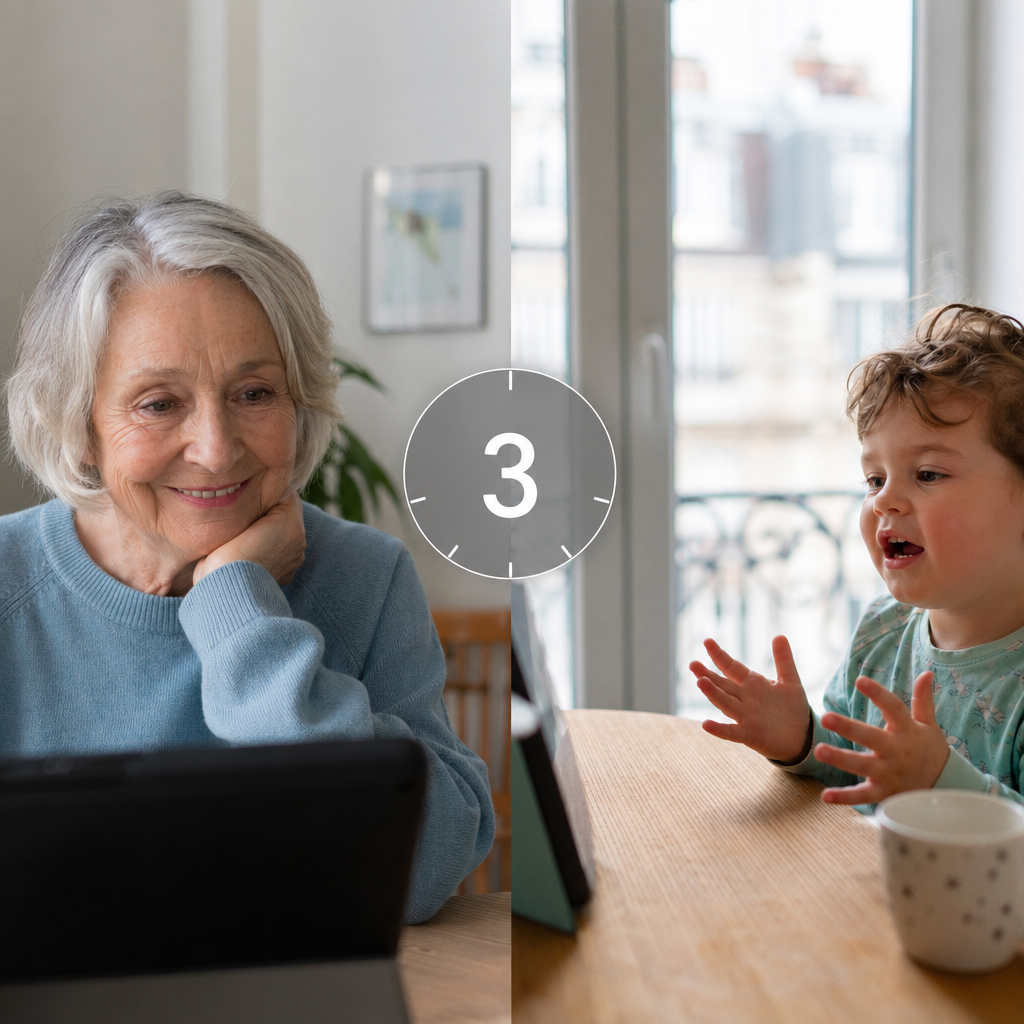
What happens in 3 seconds: The anatomy of a ruined family moment
Three seconds is enough time for a child to forget what they just said. It's enough for a grandmother's smile to fade into confusion. And it's more than enough to turn a moment of genuine connection into uncomfortable silence.
That awkward gap is exactly what families notice first on video. We look at how lower-latency systems change the feel of video call translation for families.
The neuroscience here is striking. Natural conversation operates on a 200-millisecond response window. That's the gap where interactions still feel human, where a laugh follows a joke, where comfort arrives when someone needs it. Anything beyond that starts to feel off. Three seconds is fifteen times longer than what our brains expect.
Consider what actually breaks during that delay. A five-year-old announces she lost her first tooth. By the time the translated reaction arrives, she's already showing the dog. Someone shares difficult news and needs immediate warmth. Instead they get silence, then words that arrive too late to feel genuine. A teenager makes a sarcastic comment that only works with perfect timing. The delayed response makes everyone wonder if something got lost in translation.
Business meetings tolerate these gaps. Someone takes a note, another person mutes to cough. Pauses feel professional, even thoughtful. Family dinners operate on completely different rules. A pause at the table means something is wrong. Children especially pick up on this disconnect. After a few calls where grandma's reactions feel strange and delayed, they start finding reasons to leave the room when it's time to video chat.
Why business translation tools fail at dinner table conversations
The enterprise market got real-time translation first. That's where the money is, and the results are impressive. Aramark and Avendra International cut their international meeting times by 50% using DeepL Voice. Half the time, same outcomes. For a business, that's a clear win.
Business-grade accuracy does not automatically translate into family-grade comfort. The difference is clearer in our comparison of translation apps for family video calls.
But those success metrics reveal something important about priorities. Businesses measure time saved, error rates, meeting efficiency. Nobody in a boardroom asks whether the translation preserved a moment of spontaneous laughter.
DeepL Voice leads the pack for accuracy. According to Slator comparisons, it stood out by far against Microsoft Teams, Google Meet, and Zoom in translation quality and caption stability. The accuracy leader, and rightfully so. Yet even the best tool in the category optimizes for professional contexts. A comprehensive overview of real-time multilingual translation tools shows the same pattern across the industry: features built for conference rooms, pricing structured for teams, interfaces designed for productivity.
Here's the technical reality behind this gap. Higher accuracy often requires more processing time. The system needs extra milliseconds to parse context, check grammar, select the right phrasing. In a business meeting, those milliseconds are invisible. Everyone's used to small pauses. At a dinner table, those milliseconds stack into seconds, and seconds break the rhythm of real conversation.
Comfortable silences exist in families. A grandmother watching her grandchild play, neither speaking. That silence means presence, not absence. Translation tools trained on business calls don't understand the difference.
The emotional cost of waiting: Stories from multilingual families
The technical delay creates real emotional casualties. Families don't experience latency as a software limitation. They experience it as distance.
-
A father in London stopped his weekly calls to his mother in Portugal. Not because he didn't want to talk, but because every conversation felt forced. The three-second gaps made simple exchanges feel like interviews. After six months, they text instead. Emojis arrive instantly. Love doesn't.
-
A couple in a long-distance relationship between Amsterdam and Seoul found that "I love you" landing three seconds late stops feeling like affection. It feels like an afterthought. They switched to sending voice notes, sacrificing real-time connection entirely.
-
Google clearly understands that emotion matters. Their translation feature preserves voice, tone, and expression during translation, attempting to maintain emotional texture rather than just converting words. The industry recognizes the problem. The latency still undermines the effort.
-
Older relatives often blame themselves. "I'm just not good with technology." The real issue is that latency makes conversations feel unnatural, and they assume they're doing something wrong. That self-blame compounds the isolation.
-
The pattern is predictable: awkward calls lead to fewer calls. Fewer calls weaken relationships. What started as a three-second technical delay becomes months of silence. Families looking for a phone call translator that prioritizes natural conversation flow often discover this only after the damage is done.
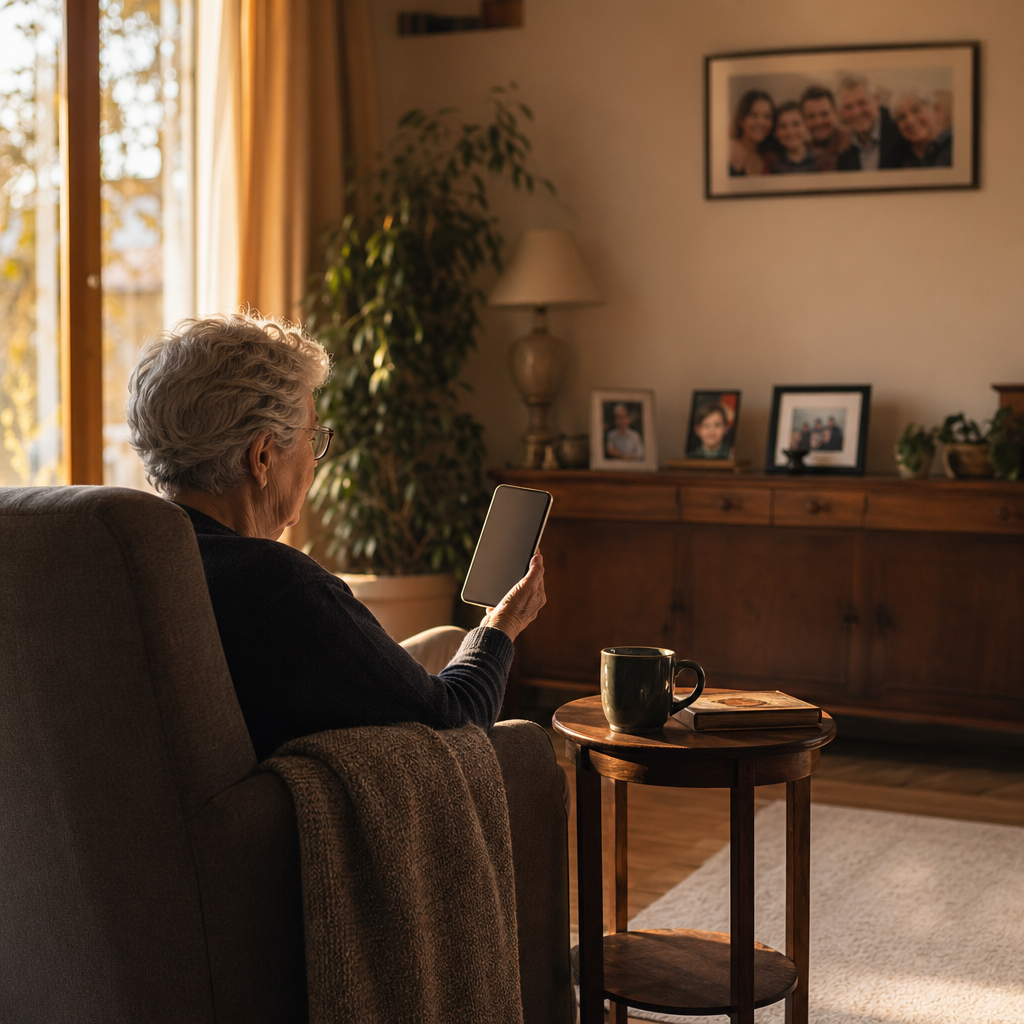
What low latency actually looks like in a family call
The experience families deserve is simple to describe and hard to deliver. Reactions that feel immediate. The ability to interrupt with excitement when a toddler does something amazing. Jokes that land with timing intact. Comfort that arrives when tears are falling, not after they've dried.
Language coverage is no longer the barrier. Most tools now support 60 to 100 languages or more. Google Translate handles live conversation in over 70 languages including Arabic, French, Hindi, Korean, Spanish, and Tamil. The new frontier is making those translations feel invisible in the flow of conversation.
The industry is making progress on accessibility. Tools like iTourTranslator work across WhatsApp, Messenger, and Zoom without requiring app installation from the other person. They join via browser link with live subtitles. That solves one problem: getting everyone connected without technical hurdles. Latency remains the harder problem to crack.
Families looking for alternatives to standard video call translation should look past marketing language. "Real-time" appears on every product page. The question is whether the tool delivers sub-second response that preserves the rhythm of natural speech. Spontaneous moments cannot be repeated. A child's first attempt at a joke happens once. A grandmother's surprised laugh either lands in the right moment or it doesn't.
The technical capability exists. The question is which tools prioritize family rhythm over boardroom accuracy.
Making every second count in your next family call
Latency is not a technical specification. It's the difference between being present when your mother needs comfort and arriving three seconds too late. Between catching your nephew's first joke and watching his confusion when the laugh doesn't come.
The families who stay connected across languages are the ones who test before the moments that matter. A quick call before the holiday gathering reveals whether a tool works for your family's rhythm. Honest feedback from older relatives about whether conversations feel natural matters more than any feature list. And latency, not language count or accuracy percentages, determines whether a video call feels like a dinner table or an interview.
Technology is improving fast. Google, DeepL, and others are racing toward lower latency and more natural conversation flow. But families deserve tools built for their specific needs now, not enterprise software with a family-friendly marketing spin added later. The difference shows up in the small moments: a grandmother's laugh landing exactly when it should, a child's excitement met with immediate warmth, difficult news received with comfort that arrives on time.
Your toddler will say something wonderful soon. Your parent will need to hear your voice. When that moment comes, three seconds is too long to wait.
Try Bridgecall free and experience what family calls feel like without the wait. Your next conversation with loved ones across languages should feel as natural as sitting at the same dinner table.
Related Bridgecall Guides
How to Translate a Phone Call Without an App
Use one browser link for a voice-only translated call with no guest installation.
Video Call Translation
Start browser-based translated video calls with voice and subtitles.
Phone Call Translator
Start voice-first multilingual conversations without app installation.
Real-Time Translation for Older Parents: 7 Call Breakers
When your mum can't figure out which button to press, she doesn't ask for help. She just smiles politely and stops trying.
Google Translate Live Calls: The Hidden Cost for Families
Google's new live translation for calls promises to connect families across languages.
Translation Apps for Family Video Calls That Connect
When you're trying to hear your grandmother laugh or comfort a crying parent, '700ms latency' means nothing.
Ready to start multilingual calls?
Create a Bridgecall room in minutes and let everyone speak in their own language.
Start your 7-day trial