Travel Translation Apps Fail for Family Calls
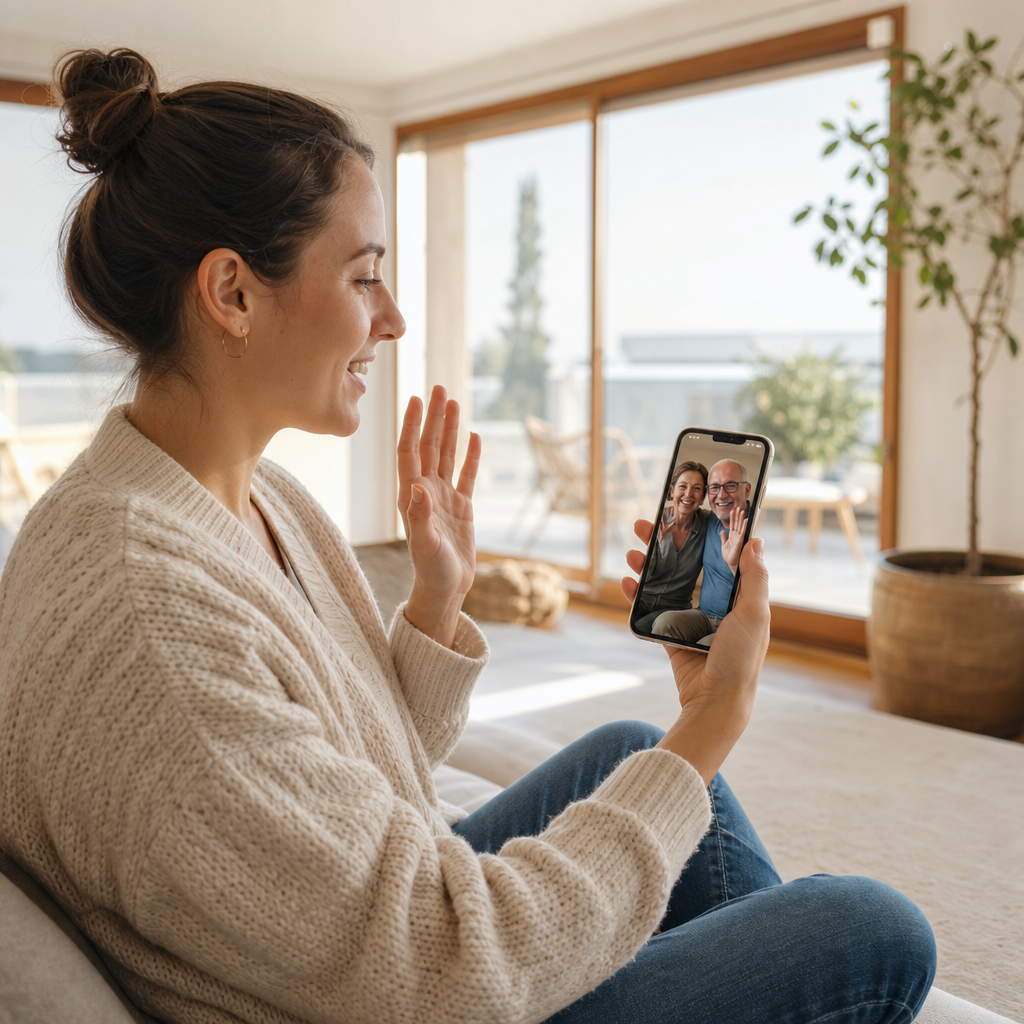
The app that helped you order pasta in Rome completely fails when grandma tries to tell a bedtime story.
Google Translate works brilliantly when you're ordering coffee in Lisbon. Click the button, speak, wait for the translation, hand your phone to the barista. But that same click-wait-click rhythm falls apart the moment you try to have a real conversation with your grandmother in Porto. Travel translation tools were built for transactions, not relationships. And the difference shows up fast when emotions enter the chat.
If you want the practical product flow, Bridgecall's video call translation page explains translated voice, subtitles, and browser-based joining in one place.
Tourist translation vs. relationship translation: Two completely different problems
Travel apps solve a specific kind of problem: transactional exchanges with strangers. Asking for directions. Ordering food. Reading a street sign. These are one-off interactions where accuracy matters, but emotional connection doesn't. You get the information, you move on. For exactly those in-person moments, a meaning-first tool like Tolk, a real-time voice translator app, handles the exchange better than button-press phrasebooks — it translates intent and tone rather than word-for-word.
Family conversations work nothing like this. They require continuous flow, spontaneous interruptions, stories that build over years. The tone that carries love across languages. A child's excited rambling about school. A grandmother's quiet wisdom delivered between the lines.
Multigenerational families experience the strongest emotional impact from language barriers. Children recognize faces but miss stories, humor, and family history. Important moments become summaries rather than real conversations.
The top travel translation apps prioritize three modes: typing text, conversation mode with button-pressing, and camera-based image translation for signs and menus. None of these are designed for continuous hands-free video call flow. Google Translate's conversation mode requires manual button-pressing for each speaker turn. Click English, talk, wait, translate, then click Portuguese, talk, wait, translate. That works fine for a quick question at a train station. It falls apart during a 45-minute Sunday call with extended family.
The emotional cost is invisible but real. Families don't need perfect restaurant vocabulary. They need grandma to stop feeling like an observer on calls with her own grandchildren.
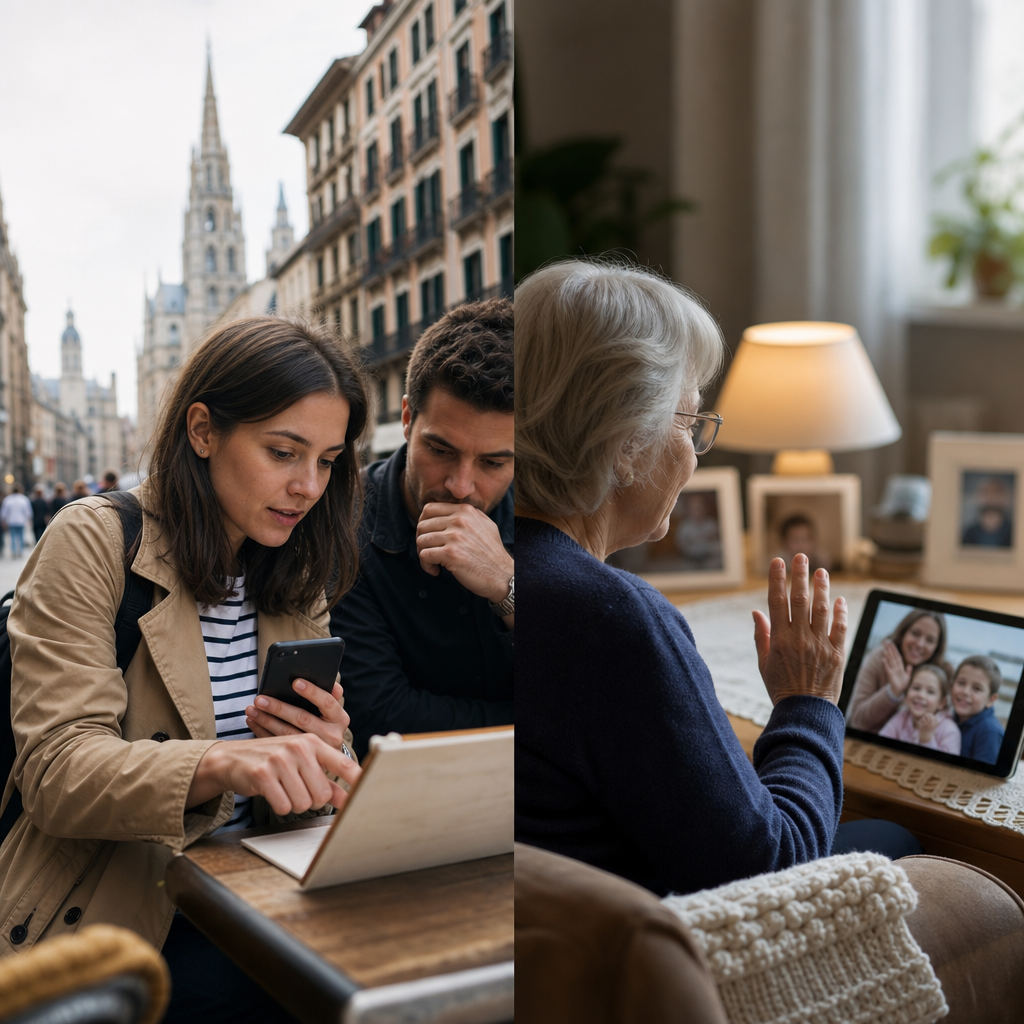
The button-press problem: What gets lost between clicks
Picture a real family video call. A child interrupts mid-sentence because the dog just knocked over a plant. Grandpa starts laughing at his own joke before he finishes telling it. Someone in the background comments on the weather. This is how families actually talk.
Button-press translation turns all of this into a frustrating queue.
The mechanics are brutal. Click English, wait for silence detection, let it translate, then click Portuguese for the response. Repeat for every single exchange. A quick back-and-forth that takes ten seconds in person stretches into a minute of awkward pauses and missed timing.
The emotional cost hits hardest in the moments that matter most. The exact second a grandmother's voice cracks while sharing a memory about her own mother? Lost while fumbling for the next button. A child's immediate giggle at a funny story? Delayed until the spontaneity drains out completely. As one frustrated user put it in a Reddit thread about hands-free translation apps, the technology exists for text, but real-time voice remains surprisingly clunky.
For tourists asking strangers for directions, pauses feel normal. Expected, even. But families know each other. They have rhythms, inside jokes, patterns built over decades. Those artificial pauses don't feel like technology limitations. They feel like distance.
And distance is exactly what these calls are supposed to bridge.
Why your 70-year-old mother cannot use your favorite travel app
The core failure pattern in multilingual families is predictable. Someone picks a translation tool that works perfectly for them, the most technical person in the family, and assumes everyone else will figure it out. They won't.
This is where family translation becomes less about features and more about trust. For the practical failure points, see our guide to real-time translation for older parents.
Travel apps assume you're in control. You hold the phone. You press the buttons. You manage every step of the interaction. But a grandmother calling from Lisbon needs to participate equally in the conversation without her son in Boston coaching her through each click. A phone call translator that requires technical management from both sides isn't a solution. It's a barrier.
The emotional math is simple. Children recognize grandma's face on screen but miss her stories, her humor, the family history she carries. Important moments become summaries relayed by a parent instead of real conversations. The Korean grandfather joins holiday calls only when someone can sit beside him and operate the app. The Portuguese grandmother stops calling altogether because it feels too complicated.
Connection becomes a technical project instead of a relationship.
And the sad part? These are exactly the family members who have the most stories to share. The most history to pass down. The most love to give, if only the technology would get out of the way.
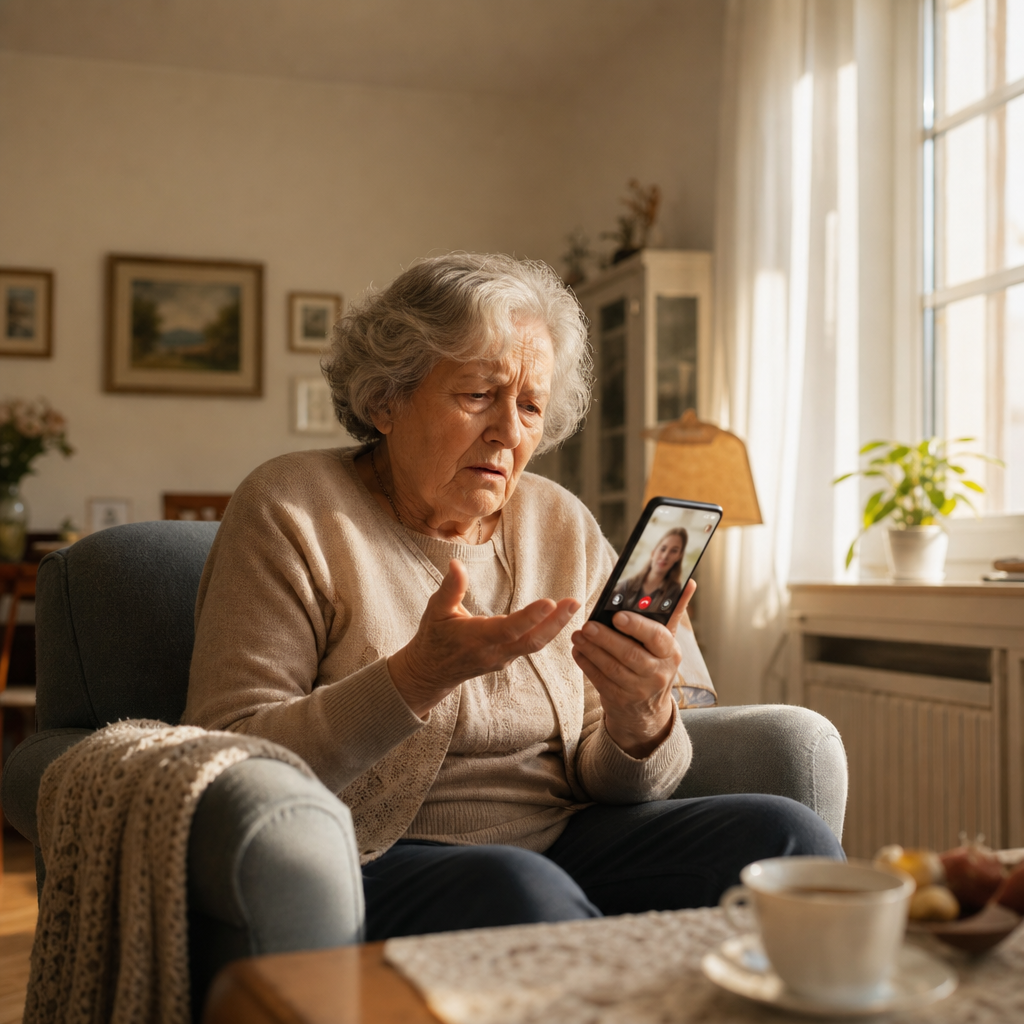
Stories are not transactions: The emotional architecture of family calls
Tourist translation solves a simple problem. "How much does this cost?" has one correct answer. You get it, you pay, you leave. The interaction has a clear beginning and end.
The same pattern shows up on video, where technical specs rarely predict whether a story feels natural. We break that down in translation apps for family video calls.
Family calls operate on completely different logic. Stories loop back to earlier conversations from months ago. References to shared memories appear without explanation because everyone already knows. Emotional subtext lives in tone, not words. And the comfortable silences between people who love each other carry meaning that no app can translate.
The technical threshold for this kind of conversation is surprisingly precise. Real-time translation needs to stay under 800ms latency in 2026, with speaker turn-taking and domain vocabulary as critical dimensions beyond basic language coverage. That speed matters because family conversations move fast. They overlap. They interrupt with love.
When translation delays even slightly, everything changes. Bedtime stories lose their rhythm, that gentle rise and fall that makes a child's eyes heavy. Jokes land flat because timing is everything in humor. The natural back-and-forth of actually knowing someone becomes stilted and formal, like talking to a stranger.
Reviews of the best translation apps for travel consistently praise accuracy for tourist scenarios. Menus, directions, quick questions at hotels. These tools excel at transactions.
But a grandmother telling her granddaughter about meeting her grandfather for the first time? That story needs flow, warmth, and perfect timing. Transactions end. Relationships continue.
What real-time family translation actually requires
The gap between tourist apps and family communication comes down to five specific technical requirements. Get these right, and grandma actually uses the technology. Get them wrong, and the phone stops ringing.
Hands-free operation tops the list. Both people need to just talk, without anyone managing buttons or turns. The moment someone has to coach a relative through interface steps, the conversation becomes work instead of connection.
Latency matters more than most people realize. Interruptions, laughter, and emotional reactions need to happen in the moment they're felt. A delay of even one second kills the timing of a joke. It flattens the spontaneity that makes family calls feel like family calls.
Voice preservation is the detail that often gets overlooked. Grandma needs to still sound like grandma. A real-time voice translator that turns her warm Portuguese into robotic English defeats the entire purpose. Families want to hear each other, not a synthetic intermediary reading a transcript.
Language coverage has improved dramatically. The top 20 languages, including major EU languages, Chinese, Japanese, Korean, Arabic, Spanish, and Portuguese, now achieve very good quality. That covers most international family combinations. The next 30 languages remain only usable, and long-tail languages still struggle with voice.
The most important requirement? Technology designed for the least technical family member. Recent coverage on multilingual video calls confirms what families already know: if grandmother can't use it independently, it doesn't solve the real problem.
From observer to participant: What families actually gain
The real measure of family translation isn't accuracy percentages. It's whether grandma feels like part of the conversation or like she's watching it happen from the outside.
That shift matters more than any technical specification. When translation becomes invisible, a grandmother stops being the quiet face on the screen who smiles politely while everyone else talks. She becomes the person telling stories, making jokes, asking her granddaughter about that boy from school she mentioned last month.
Children who grow up with real conversations across languages develop actual relationships with relatives. Not just recognition of faces, but understanding of personalities. They learn that great-uncle Carlos is funny. That grandmother gets emotional when she talks about the village where she grew up. That grandfather always exaggerates the size of the fish he caught in 1973.
Family history survives this way. Inside jokes get passed down. The specific way your father tells that one story about his childhood, complete with the pause before the punchline, stays alive for another generation.
The goal was never perfect translation. Perfect translation is a technical metric that means nothing to a child who just wants to understand why grandma is laughing. The goal is removing the barrier so the relationship can be the focus. So the technology disappears and the family remains.
See how Bridgecall keeps family conversations flowing naturally, without buttons, delays, or technical frustration. Try it on your next call with the people who matter most.
Related Bridgecall Guides
How to Translate a Phone Call Without an App
Use one browser link for a voice-only translated call with no guest installation.
Video Call Translation
Start browser-based translated video calls with voice and subtitles.
Phone Call Translator
Start voice-first multilingual conversations without app installation.
Real-Time Translation App Problems That Hurt Family Calls
Translation apps promise seamless family conversations across languages.
Multilingual Grandparents: Beyond the Parent Translator
For years, bilingual parents have narrated every video call between grandparents and grandchildren who don't share a language.
Video Call Translation with Family: What Works in 2026
Your grandmother just sent a WhatsApp video call request and you don't speak the same language.
Ready to start multilingual calls?
Create a Bridgecall room in minutes and let everyone speak in their own language.
Get started