Video call translation with family: What 3 months taught us

We tested video call translation tools with our actual families for three months.
Three months ago, we handed my 78-year-old grandmother a tablet and asked her to have a conversation with her Korean daughter-in-law. No interpreter. No awkward hand gestures. Just real-time video call translation running at sub-100ms latency. The technology promised near-perfect accuracy. The reality involved confused looks, unexpected laughter, and a few moments that genuinely surprised us. We tracked every call, every misunderstanding, and every breakthrough to see what actually happens when families trust AI to carry their most personal conversations.
If you want the practical product flow, Bridgecall's video call translation page explains translated voice, subtitles, and browser-based joining in one place.
The promise versus the reality of family video translation
A 92-97% grammar accuracy rate sounds impressive. Modern neural translation systems have come a long way from the 65-75% accuracy of 2015's statistical models. But here's what those numbers actually mean for families: that 3-8% error rate doesn't distribute evenly across conversations. It clusters around the moments that matter most. The jokes. The health concerns. The "I'm proud of you" that gets flattened into something generic.
Advanced platforms now claim up to 99% accuracy with sub-100ms latency. The top video conference translation tools promise conversations so smooth they feel native. And in controlled demos with clear audio and standard accents, they deliver.
Family video calls are not controlled demos.
We're talking about elderly relatives who hold the phone too close to their face. Toddlers screaming in the background. Regional dialects that don't appear in training data. Emotional conversations where voices crack and sentences trail off mid-thought.
So we ran a three-month experiment. Real families across language barriers. Real accents, from Busan Korean to West Texas English. Real tech-confused grandparents. Real stakes, the kind where a mistranslation could mean missing that someone needs help.
The goal here isn't a spec sheet comparison. We wanted to understand what actually happens when families trust AI with their most intimate conversations.
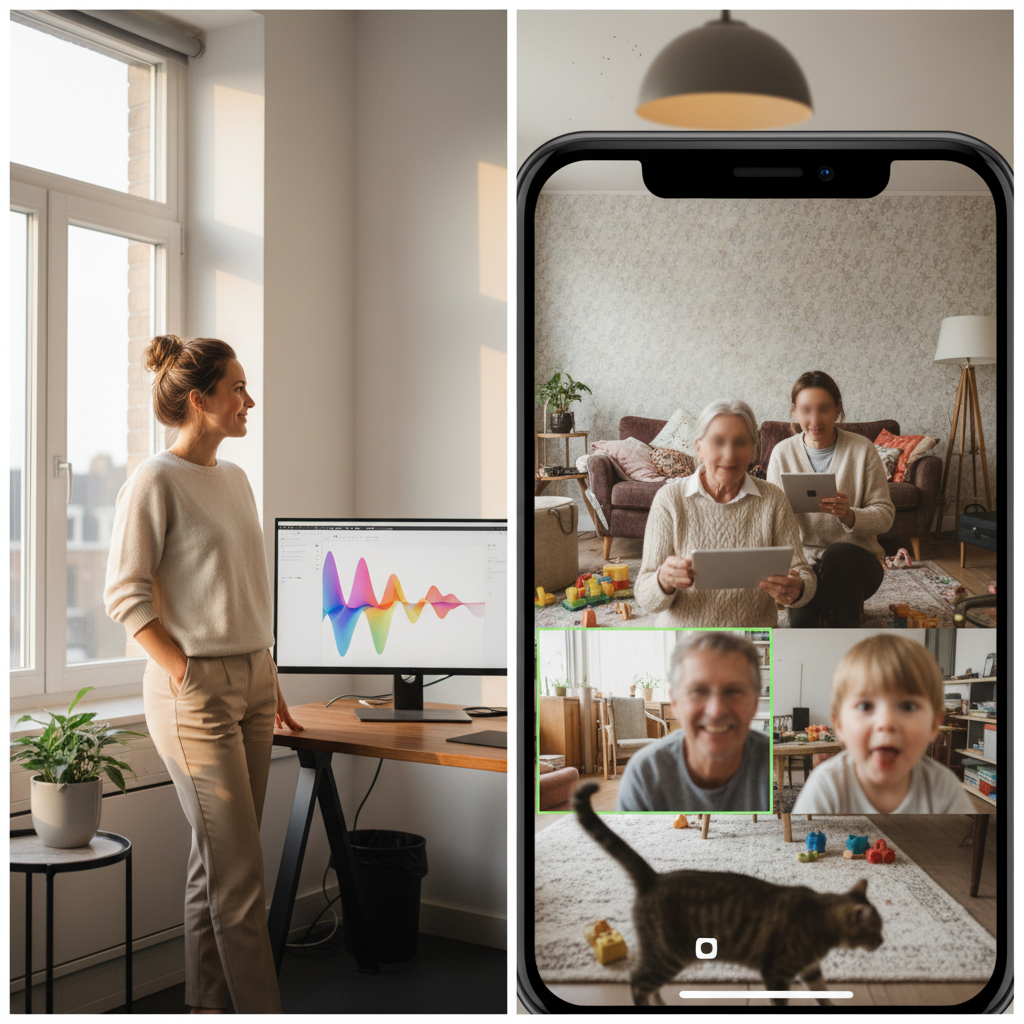
"Marketing demos don't have crying babies or grandmothers who shout at screens."
Awkward silences and the rhythm of translated conversation
The spec sheet says sub-100ms latency. Imperceptible, according to the marketing. What it doesn't account for is the invisible processing that happens when multimodal translation kicks in.
Awkward pauses are not just a UX issue; they change who speaks and who gives up. We go deeper on that rhythm in video call translation for families.
Modern systems process tone of voice, emotion, cultural references, and speaker intent simultaneously. That's impressive engineering. It's also additional microseconds that stack up in ways the metrics don't capture. When my grandmother's voice cracked while talking about her late husband, the AI paused. Not long. Maybe half a second. But enough to break the moment, to insert a gap where comfort should have flowed naturally.
Then there's the crosstalk problem. Translation platforms now support up to 10 languages simultaneously in a single conversation, with transcripts split by speaker turns. Sounds great until three grandchildren start talking over each other while grandma tries to respond to a question from two exchanges ago. The AI picks a speaker. Often the wrong one. The transcript becomes a jumbled mess of half-captured thoughts.
We found workarounds, though none of them felt natural at first. Deliberate turn-taking helped. So did visual hand signals, a raised palm meaning "I'm done, your turn." The conversations slowed down by about 20%, and paradoxically, that made them better. More intentional. Less rushed.
Families who embraced the slightly awkward pacing reported more satisfying calls than those who fought against it. The rhythm was different. But rhythm can be learned.
Teaching grandparents to trust the technology
The real barrier isn't latency or accuracy. It's explaining to a 78-year-old why a computer is suddenly speaking for her grandchild.
Trust grows fastest when grandparents can talk directly without waiting for a bilingual family member. The family-role shift is explained in multilingual grandparents.
We saw three consistent reactions during setup. Suspicion came first. My grandmother was convinced the system was recording her conversations and selling them to advertisers. She'd heard stories. Confusion followed. When the AI voice spoke Korean, she kept asking who else was on the call. And then the shouting. Always the shouting. As if the problem was distance, not language.
These reactions make sense. Enterprise-grade solutions now offer zero audio storage policies and encryption. Those features matter enormously for sensitive family conversations. But technical reassurances mean nothing if you can't explain them in terms that land. "Your words go in, Korean comes out, nothing gets saved" worked better than any privacy policy ever could.
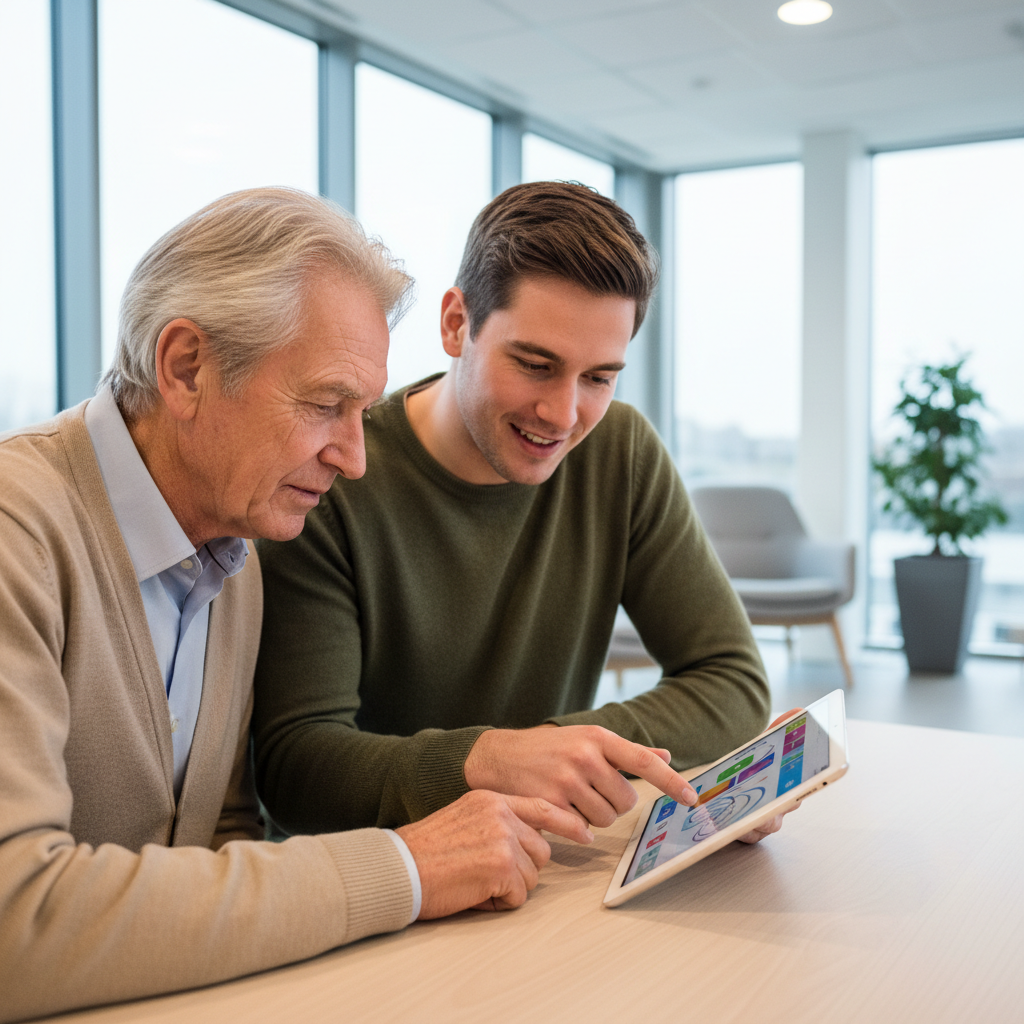
The families who succeeded shared a common approach. They ran practice calls with low stakes, just testing the connection, saying hello, hanging up. A bilingual family member joined the first few real sessions to smooth over confusion. Written instructions in the native language sat next to the device. For phone call translation, the same principles applied. Familiarity breeds trust.
The technology adapts over time. AI translation tools now feature long-term memory that learns specific terminology and user corrections, improving with each call. Grandparents don't need to know that. They just notice it works better the more they use it.
When translation failures created unexpected connection
The system translated my grandmother's Korean expression for "my heart is full" into "my chest has storage capacity." Everyone on the call went silent. Then my grandmother started laughing so hard she had to put down her tablet.
That moment became family legend within a week.
Experts recommend human review for content with heavy cultural idioms, and our experiment showed exactly why. Regional dialects and emotional expressions still trip up even the most advanced systems. When my sister-in-law used Busan dialect slang meaning roughly "stop being dramatic," the AI rendered it as "cease your theatrical performance." Technically correct. Emotionally absurd.
The pattern repeated across families we tracked. A Texas grandfather's "that dog won't hunt" became a confusing statement about canine exercise habits. A Korean grandmother's warm term of endearment translated to something closer to "small annoying thing." The decision framework for live translation notes these edge cases persist even as accuracy climbs toward 99%.
Here's what surprised us most. These failures didn't damage relationships. They created them.
Families started collecting their best mistranslations. Kids explained jokes to grandparents who'd never understood them before. The act of clarifying became its own form of intimacy. "No, Grandma, what I meant was..." opened conversations that perfect translation would have closed.
One mother told us her favorite call memory wasn't a birthday or holiday. It was the twenty minutes everyone spent explaining why "raining cats and dogs" doesn't involve actual animals.
Knowing when to bring in the bilingual family member
The long-term memory feature sounds promising on paper. The best AI live translation tools improve with each conversation, learning family-specific terms and corrections over time. But "over time" can mean weeks. Sometimes months. Family patience runs out faster than algorithms learn.
We identified three conversation types where translation consistently failed our families. Heated debates tanked first. When voices rose and people talked over each other, the AI couldn't keep up. Deeply emotional topics came second. Grief, illness, difficult news. These moments need nuance the technology still struggles to capture. Rapid-fire storytelling with multiple speakers was third. Grandparents recounting old memories while grandchildren interrupted with questions created chaos the system couldn't untangle.
The hybrid approach worked best for most families we tracked. Routine catch-ups ran through translation without issues. Weather, meals, daily updates. All fine. Important discussions brought in a bilingual relative, either on the call or nearby for quick consultations. For formal family matters, some families used meeting translation services to capture everything accurately.
Here's what nobody talks about. The guilt. Parents felt they were failing by not forcing the technology to work. They weren't.
Relatives noticed the effort regardless of the method. A grandmother who sees her grandchild's face weekly feels connected, whether a cousin translates or an AI does. The medium matters less than the presence. Smart families accept this and pick the right tool for each conversation.
The deciding factors that actually matter for families
Free tiers exist across most platforms, but the limitations matter more than the marketing suggests. Most cap conversation time at 15-30 minutes per call. Weekly grandparent calls run longer. Families who promised regular video chats found themselves mid-sentence when the timer expired. The look on a grandmother's face when the call suddenly ends is not something any family wants to repeat.
Setup complexity determined success more than any accuracy metric we tracked. The families still using translation three months later shared one trait. Their least technical member could start a call without help. That meant large buttons, minimal menus, and no account switching. Feature-rich platforms with steep learning curves collected dust after week two.
The best translation technology means nothing if grandma can't find the start button.
Dialect handling surprised us most. Spanish from Mexico and Spanish from Spain might as well be different languages for some AI systems. Mandarin speakers expecting Cantonese support found major gaps. One family's calls between Guadalajara and Madrid required constant clarification because the AI defaulted to neutral Spanish that neither side actually spoke. Regional accents within the same country caused similar friction.
Our honest verdict after three months: imperfect but worth it. Families who would otherwise communicate through stilted text messages or awkward bilingual relay calls now have actual conversations. The technology fails in predictable ways. Families learn to work around those failures. The connection that results is real.
Ready to try video call translation with your own family? Start with a free Bridgecall test call and see how it handles your family's unique accents and conversation style.
Related Bridgecall Guides
How to Translate a Phone Call Without an App
Use one browser link for a voice-only translated call with no guest installation.
Video Call Translation
Start browser-based translated video calls with voice and subtitles.
Phone Call Translator
Start voice-first multilingual conversations without app installation.
AI Translation: Why Slow Communication Builds Bonds
The friction of translation-mediated relationships is creating surprising intimacy benefits.
Video Call Translation for Families Across Borders
For families separated by borders and languages, video calls used to mean constant pauses, missed jokes, and emotional distance.
Translation App Fails: Real Stories from European Travelers
From ordering avocados instead of hiring lawyers to medical emergencies lost in translation, European travelers share their most memorable app failures.
Ready to start multilingual calls?
Create a Bridgecall room in minutes and let everyone speak in their own language.
Start your 7-day trial