Multilingual Grandparents: Beyond the Parent Translator

For years, bilingual parents have narrated every video call between grandparents and grandchildren who don't share a language.
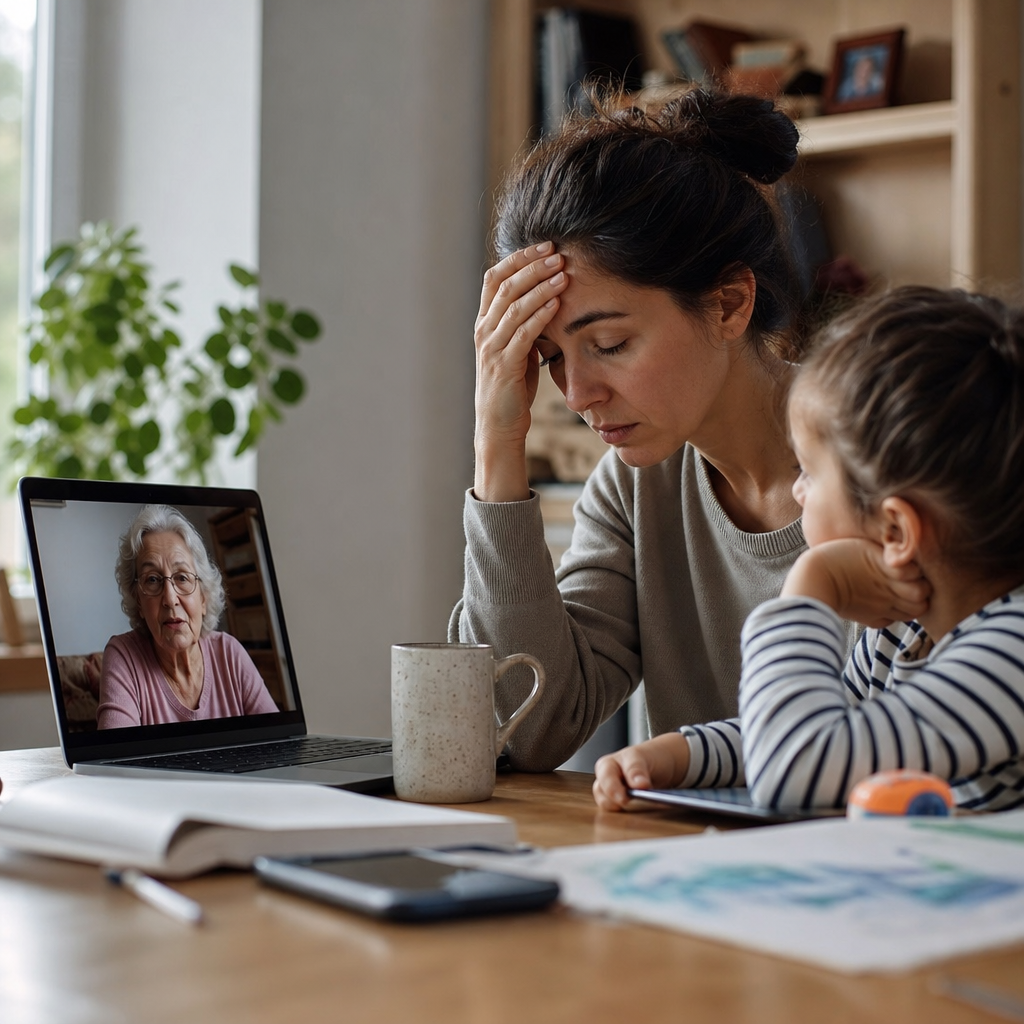
Eight minutes. That's how long the average grandparent-grandchild video call lasts when language erosion kicks in, turning what should be a real conversation into a show-and-tell narrated by an exhausted parent in the middle. A Vietnamese grandmother in Hanoi asks a question, her Sydney-born grandchild answers in English, and the parent bounces between two worlds, translating both words and emotions while their coffee goes cold. The irony? Kids who regularly chat with grandparents in their native language retain 30% more vocabulary than those using apps or formal classes. The connection is there. The language barrier just keeps getting in the way.
For the live calling experience itself, Bridgecall helps people start translated video calls with one link and no guest installation.
The hidden exhaustion of being your family's forever translator
Parents in multilingual families don't just schedule video calls. They narrate entire relationships, translating not only words but tone, humor, and emotion between two people who love each other but can't quite reach each other directly.
- The middle generation often loses their own conversation time with their parents. There's no space to catch up about work stress or share personal news when every sentence needs to be relayed to a child who's already losing interest.
- Grandparents can't comfort a crying grandchild, share an inside joke, or gently correct behavior. Everything passes through the parent first, and something always gets lost along the way.
- Relationships become performative. When grandparents have no common language with their grandchildren, calls turn into scripted routines rather than real conversations.
- The emotional cost builds quietly. Guilt surfaces when exhaustion makes translations half-hearted. Resentment creeps in, often unspoken. And underneath it all, there's the ache of watching bonds that could run deep stay frustratingly shallow.
The role of "family translator" has no off switch. It follows parents into every call, every visit, every moment that should feel effortless but requires constant mental labor instead.
Why text translation and fragmented workarounds keep failing
Cross-cultural families have been stitching workflows together for years. A translator app in one tab, the video chat in another, maybe a list of phrases the kids might know in a third. For text messages, this patchwork approach sort of works. For real-time calls, it falls apart completely.
If the goal is everyday family connection, fragmented apps usually add another task for the bilingual person. The broader toolkit is covered in real-time call translation for families.
The issue with text translation runs deeper than inconvenience. Conversations become dry and cumbersome to navigate when every message needs to be copied, translated, and interpreted. Teaching grandparents to paste messages into Google Translate sounds simple enough. In practice, it rarely sticks. The friction adds up, and eventually people just send fewer messages.
Even WhatsApp's 2025 on-device translation, covering 19+ languages on iPhone, only solves part of the problem. Each person sees the translation on their own phone. Useful for catching up on messages later, less useful when you're trying to have an actual conversation in the moment.
Voice and video calls are fundamentally different. You can't pause a three-year-old mid-sentence to type her words into an app. You can't ask a grandmother to hold that story about her childhood while you fumble between tabs. Conversation flows or it doesn't. Real-time speech doesn't wait for workarounds.
The core problem remains unsolved. Families have tried every combination of free tools and manual translation. None of them address what actually matters: live, flowing conversation between generations who love each other but don't share a language.
What changes when grandparents and grandchildren can finally talk directly
Something shifts when a grandmother can finally tell her own story. Not through a tired parent paraphrasing between sips of cold coffee, but directly to the wide-eyed grandchild holding the tablet.
Real-time voice translation makes this possible. Words spoken in Vietnamese come through in English, instantly. The response flows back the same way. No copying into apps, no tab switching, no asking anyone to hold that thought.
The change goes beyond convenience. Research on grandparent-grandchild cultural exchanges over video chat shows these connections carry real weight. Kids who regularly video chat with grandparents in their native language remember 30% more vocabulary after six months compared to those using apps or formal classes. The vocabulary boost matters, but it's a side effect of something larger: actual relationships forming without a middleman.
Grandpa can finally land his own jokes. A grandchild can ramble about their day, the way kids do, without waiting for someone to relay each sentence. The small moments that build closeness stop getting filtered.
And the parent in the middle? They get their own relationship back. A chance to catch up about work stress, share personal news, or simply step away while two people who love each other finally talk on their own terms.

The tension: Relief, displacement, and losing oversight
The first time a grandmother and grandchild laugh together without translation, something complicated happens to the parent watching from the doorway. Relief, yes. But also a strange sense of displacement. The role that defined so many exhausting video calls suddenly feels less essential.
Some parents welcome the shift immediately. Others feel an unexpected loss. For years, every joke, every story, every moment of connection passed through them. Now it doesn't have to.
The worry isn't always about being needed. Sometimes it's about what gets said when you're not in the middle anymore.
What if grandparents share values the parent wouldn't endorse? Cultural perspectives that clash with how they're raising their kids? Resources on multilingual families and grandparents often acknowledge this friction: the parent used to be the filter, softening edges, adding context, choosing what to relay. Direct conversation removes that buffer entirely.
The reality brings parents back into the frame, though differently. Younger grandchildren, especially those under seven, still struggle to maintain attention during video chats. Someone needs to redirect wandering focus, manage interruptions, keep the conversation from collapsing into chaos.
And many grandparents still need help just getting the call started. Technological challenges, disabilities, or simple skepticism mean the parent remains the one pressing buttons and troubleshooting connections.
The role evolves rather than disappears. Less translator, more facilitator. Still present, just no longer the bottleneck.
Making direct grandparent calls work in practice
The tech barrier is real. Not all grandparents know how to use video calling apps, and many need their adult children just to get the call started. That's completely fine. Families finding success with translation-assisted calls typically handle setup themselves at first, then hand over control gradually as grandparents get comfortable with the routine.
Direct calls only work when the setup respects older relatives instead of asking them to become tech support experts. The key breakpoints are mapped in real-time translation for older parents.
For younger grandchildren, especially those under seven, attention spans are short. Parents who stay nearby during the first few calls can help redirect wandering focus and keep the conversation from collapsing. Over time, as the direct relationship develops, stepping back becomes easier. The goal is presence without mediation.
Some grandparents find video calls overwhelming. The camera, the screen, the pressure to perform. Phone call translation offers a simpler alternative for those who prefer the familiarity of a traditional phone call. Same real-time translation, less technological friction.
A few things help the transition go smoothly. Explaining to grandparents beforehand how the translation works removes confusion mid-call. And imperfect calls are still progress. Awkward pauses, mistranslated jokes, moments of fumbling with technology. All of it is part of building something new.
Relationships between grandparents and grandchildren develop at their own pace. The first call might last five minutes. The tenth might stretch to twenty. What matters is that for the first time, both people are actually talking to each other.
From narrator to witness: A new role for the middle generation
For years, you've been the bridge. Every call, every visit, every conversation flowed through you. Exhausting doesn't begin to cover it.
The shift feels strange at first. Watching your mother tell your daughter a story, hearing laughter you didn't facilitate, realizing a joke landed without your help. There's a moment where you wonder if you're still needed.
You are. Just differently.
The eight-minute narrated show-and-tell becomes something else entirely. Real conversations stretch longer. Inside jokes develop that you hear about later, secondhand, the way it works in monolingual families. Your child mentions something grandma said last week, and you weren't there for it. That's healthy. That's how family relationships are supposed to form.
The gift is quieter than expected. It's watching your parent become a grandparent in the truest sense, not just someone who appears on a screen while you do the talking. It's your child building memories that belong to them alone.
And for you? The exhausted parent who has carried two generations on your shoulders during every call? Direct translation doesn't take something away. It gives you back the relationship you've been too busy translating to actually have.
Give your parents and children their own conversations. Try Bridgecall free for your next family call and see what happens when you're no longer the translator.
Related Bridgecall Guides
How to Translate a Phone Call Without an App
Use one browser link for a voice-only translated call with no guest installation.
Video Call Translation
Start browser-based translated video calls with voice and subtitles.
Phone Call Translator
Start voice-first multilingual conversations without app installation.
Travel Translation Apps Fail for Family Calls
The app that helped you order pasta in Rome completely fails when grandma tries to tell a bedtime story.
Translation Apps for Family Video Calls That Connect
When you're trying to hear your grandmother laugh or comfort a crying parent, '700ms latency' means nothing.
Real-Time Translation App Problems That Hurt Family Calls
Translation apps promise seamless family conversations across languages.
Ready to start multilingual calls?
Create a Bridgecall room in minutes and let everyone speak in their own language.
Get started