Telehealth Call Translation: When to Use an Interpreter

Not every telehealth call needs a certified interpreter. Learn which health conversations require professional interpretation and when translation apps
Nearly 1 in 5 U.S. residents speak a language other than English at home. That's roughly 67 million people who may need language support during a telehealth appointment. Federal law already requires healthcare providers to offer interpreter services, but the real question for most clinics isn't whether to provide language access. It's knowing when a certified medical interpreter is essential and when real-time translation tools can handle the conversation just fine.
Why language access in telehealth matters for your safety
Clear communication during a medical appointment isn't a nice-to-have. It's a safety issue, and the numbers make that obvious.
- Nearly 1 in 5 U.S. residents speak a language other than English at home. That's roughly 67 million people whose telehealth experience depends on effective language support.
- Miscommunication in healthcare leads to real harm: misdiagnosis, medication errors, and poor follow-up care. One wrong dosage instruction or misunderstood symptom can have serious consequences.
- Federal regulations, specifically Title VI and Section 1557, require healthcare providers to offer language access. Compliance isn't optional.
- From a patient perspective, the practical question becomes: when is it worth requesting a certified interpreter before an appointment, and when will a real-time translation tool handle the conversation well enough?
- The decision comes down to risk. Conversations involving surgical consent, serious diagnoses, or end-of-life care call for certified medical interpreters. Routine interactions like appointment reminders, simple follow-ups, or post-visit check-ins work well with real-time AI translation tools.
Understanding this distinction helps patients advocate for the right level of support. High-stakes conversations deserve human interpreters. Everyday exchanges don't always need them.
Red flags that signal you need a certified interpreter
Some conversations carry too much weight for translation software to handle alone. When the stakes involve legal consent, life-altering decisions, or complex medical information, human interpreters remain the standard of care.
- Surgical consent discussions require more than word-for-word translation. Patients need to understand risks, alternatives, and what recovery actually looks like. A certified interpreter can catch confusion and clarify in real time.
- Serious diagnoses come with emotional weight and medical terminology that doesn't translate cleanly. Cancer, chronic conditions, genetic disorders. These conversations need someone who understands both the clinical language and the cultural context.
- End-of-life care conversations involve nuance that AI simply can't read. Tone, pauses, grief. Human interpreters pick up on what's not being said and can ask the clarifying questions that matter most.
- Complex shared decision-making, like choosing between treatment options or enrolling in clinical trials, demands back-and-forth dialogue. Interpreters trained in medical settings know how to facilitate that exchange without oversimplifying.
- Federal law backs this up. Title VI and Section 1557 require healthcare providers to offer language access. Patients have the right to request interpreter services, especially when documents need signing or major treatment decisions are on the table.
The practical move: request an interpreter when scheduling any appointment involving consent forms, new diagnoses, or treatment planning. Modern telehealth platforms can add medically certified interpreters with a single click, covering hundreds of languages on demand.
Routine health calls where translation technology works well
Not every healthcare conversation requires a certified interpreter. The routine stuff, like confirming an appointment time, asking when test results will be ready, or checking pharmacy pickup details, often works fine with real-time translation technology.
The practical advantages are obvious. No scheduling ahead of time. No waiting for an interpreter to connect. Just immediate access on your own device, whenever the call happens.
Over-the-Phone Interpreting averages faster connection times than video options, making it well suited for quick scheduling calls and follow-ups where seeing faces isn't necessary. That speed matters when you're calling a clinic between meetings or during a lunch break.
Common examples where translation tools handle the job well: confirming your next appointment slot, clarifying basic aftercare instructions like "ice for 20 minutes, twice daily," asking whether a prescription is ready for pickup, or scheduling a routine follow-up visit.
A phone call translator works by converting speech in real time, letting both sides of the conversation speak naturally in their own language. For straightforward exchanges with predictable questions and answers, the technology keeps pace.
The key principle comes down to familiarity. If you already understand your diagnosis and treatment plan, routine follow-up communication often works fine with translation technology. The heavy lifting, the explanation and consent, already happened with proper interpretation. What's left is logistics, and that's where AI translation tools earn their place.
Video versus phone: Choosing the right format for your call
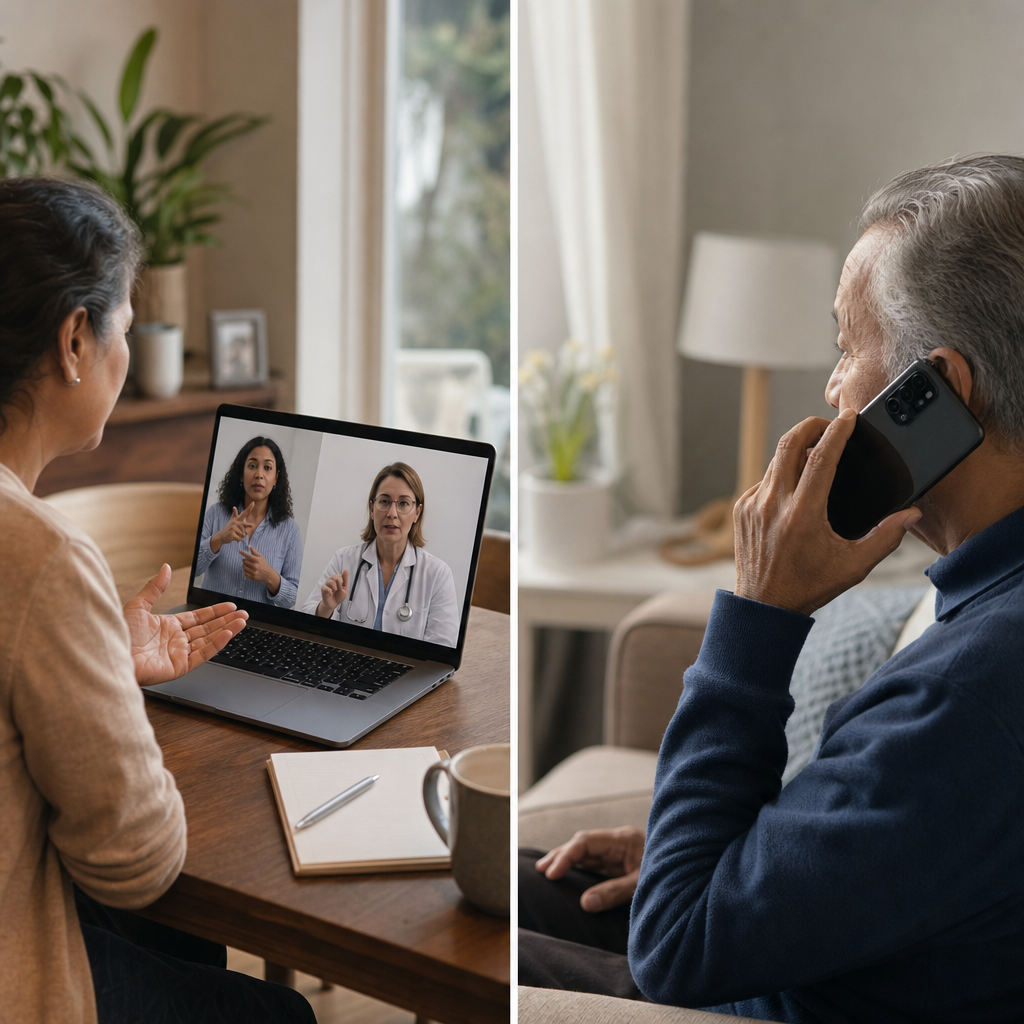
The choice between video and phone interpretation comes down to what the conversation actually requires. Understanding the difference between Video Remote Interpreting and Over-the-Phone Interpreting helps patients and caregivers pick the right format before the call even starts.
- Video Remote Interpreting (VRI) averages 1.2 to 1.8 seconds of latency, which works well for structured appointments. The visual element matters when doctors need to show X-rays, demonstrate physical therapy exercises, or walk through lab results on a shared screen.
- Over-the-Phone Interpreting (OPI) connects faster and fits quick exchanges. Pharmacy questions, appointment changes, or brief symptom updates rarely need a video setup.
- Translation tools follow the same logic. Video calls benefit from screen sharing and visual cues. Phone calls with a real-time voice translator handle the back-and-forth of simple logistics without the extra steps of joining a video link.
- Family caregivers often handle routine calls on behalf of elderly relatives. Accessible phone translation makes it easier to confirm prescriptions, reschedule visits, or relay basic updates without coordinating video equipment.
The practical filter: if the provider needs to show something, video with interpretation or translation is more effective. If the call is purely verbal, phone works faster.

How to prepare for both scenarios
Preparation looks different depending on whether the call involves a certified interpreter or a translation tool. The distinction matters more than most people realize.
For appointments requiring interpreters, the timing of the request makes a real difference. Patients who call ahead when scheduling get matched with interpreters who speak their specific dialect, not just the general language. A Mandarin speaker from Taiwan and one from mainland China may need different interpreters. Having questions written down beforehand also helps the interpreter convey exactly what you mean.
For routine calls using translation technology, a quick test run before dialing saves frustration. Keep medication names, appointment dates, and provider details within reach. A notepad helps capture key information as the conversation happens.
During any health call, short sentences work better than long explanations. Pausing to confirm understanding catches miscommunication early. Asking for written summaries of important instructions creates a reference point for later.
After the conversation ends, the follow-up matters too. Interpreted appointments often come with discharge or visit summary documents, and patients can request translated versions. For routine translated calls, repeating back key details confirms accuracy before hanging up.
One cost detail worth knowing: interpreter services are required at no charge under federal law. Translation apps, meanwhile, put everyday communication in your hands without waiting for services.
For routine health calls between appointments, try Bridgecall's real-time translation to communicate clearly with pharmacies, scheduling staff, and follow-up nurses in your language.
Related Bridgecall Guides
How to Translate a Phone Call Without an App
Use one browser link for a voice-only translated call with no guest installation.
Video Call Translation
Start browser-based translated video calls with voice and subtitles.
Phone Call Translator
Start voice-first multilingual conversations without app installation.
Translate Phone Calls From Spanish to English: 4 Methods
Pick your Spanish to English translation method based on failure consequences, not features. Four approaches ranked by stakes and recovery options.
Lesser-Spoken European Languages: Why Dialects Break Calls
Your Portuguese grandmother's Alentejo accent or your partner's Sicilian-speaking nonna live just a few hundred kilometers from where translation apps
How to Translate a Phone Call Without Installing an App
Translate a voice call through one browser link. Learn what your guest needs, how to set it up, and when regular phone number translation is different.
Ready to start multilingual calls?
Create a Bridgecall room in minutes and let everyone speak in their own language.
Get started